Showing posts with label Sherlock Holmes. Show all posts

Tuesday, 14 July 2015

Head-to-Head Sherlock Holmes Part 3 (Robert Stephens v.s. Nicol Williamson v.s. Jeremy Brett v.s. Nicholas Rowe); and Final Ranking of all the Sherlocks

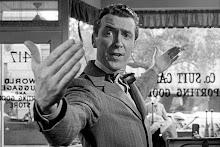
Robert Stephens played Sherlock Holmes in 'The Private Life of Sherlock Holmes' (1970)

I'm a massive Billy Wilder fan; 'Stalag 17' is one of my favourite films of all-time, and I also love 'The Apartment', 'Sunset Boulevard', and 'Double Indemnity' a great deal, and really like 'The Lost Weekend' and 'Ace in the Hole'. Having said that I do think he's a director who works best when he has a direct, concise little plot to develop his style and storytelling genius around. 'The Private Life of Sherlock Holmes' is simply too scattershot to really flourish; it's not a complete failure, but I have to say the overall effect of this 'deconstructive' Holmes tale is rather muted as I never really got a sense of what kind of story it was trying to tell. It's sort of a comedy but not really funny, there's mystery but quite frankly it's not all that interesting, and above all Wilder's greatest strength, characterization, is nullified by the paper-thin supporting characters, some like the grave-digger and kooky lady in a wheelchair are funny to watch but unlike say the barracks men in 'Stalag 17', they never feel like anything more than just scenery fodder.

I've been a bit negative thus far about the film but I must state, it's not without merit as I feel Wilder does a good enough job of evoking this very particular setting and tone for Holmes. On the minus side for the actors, Wilder seems to have the style and directorial approach domineer over the acting this time round, which presents a limitation for Robert Stephens as Holmes. I hate to use the cliche of the scenery dominating the actors and making them little more than tools for the director's vision, but such is the truth here. Stephens mostly just has to maintain a very consistent characterisation of Holmes as a suave smartass, which is fine since he's convincing enough in this act, the problem is there's nowhere else to go really with the character. There's definitely potential there for more, but mostly he just stays fairly constant. There's a scene in particular, where he's breaking down the mystery of the Loch Ness/mechanical monster, where I felt in particular that Stephens was pretty good in showing the intellectual fervour of Holmes, but quite frankly could've brought a little bit more energy to make it more entertaining.He's a fairly human Holmes which is realistcally played with a touch of melancholy to his portrayal, but not much else beyond that.

All in all it's a decent performance but nothing exceptional, and I must say that though I did admire much of the cinematography, flair and style of the film, one aspect severely lacking was in the characterization of Holmes. He and Colin Blakely as Holmes have some good scenes together where they establish the potential for some cracking chemistry, but unfortunately the film itself is never quite assured enough to state what it really wants from the interplay between the two, making the relationship and indeed, Stephens' performance, a missed opportunity, if not without merit.

Robert Stephens in 'The Private Life of Sherlock Holmes' (1970): 3/5

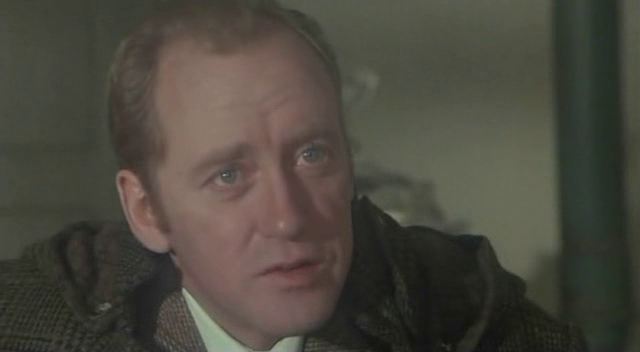
Nicol Williamson played Sherlock Holmes in 'The Seven-Per-Cent Solution' (1976)

I actually rather 'The Seven-Per-Cent Solution' for what it was, an odd little film which pits Holmes against less a mystery than his own personal demons and delusions. It's a bit dated and some of the Freudian stuff's a bit on the nose but it's certainly an interesting flick.

Nicol Williamson is an actor I'm afraid I'm not much familiar with, but based on a lot of praise he's garnered over the ages it seems he was the master of neuroses, the perfect Hamlet according to many critics. I mention that because having seen this film I can certainly see, without even having seen his version of the Prince of Denmark myself, where this perfection would've stemmed from. Williamson from the outset is pitch perfect in his creation of Holmes' growing madness. As with Hamlet it's left somewhat ambiguous as to whether it's entirely genuine or somewhat feigned but Williamson strikes the perfect balance between the two. Indeed I could very well see this performance as being sort of a precursor to Cumberbatch's modern portrayal of Sherlock as a sociopathic, somewhat mad anti-hero, Williamson's depiction of Holmes' frentic madness a sight to behold and no doubt an influence on Cumberbatch's mannerisms and tics to an extent.

With Robert Duvall's Watson (a good performance) there's not much chemistry but it works for the dysfunctional relationship between the two. With Freud (an interesting performance by Alan Arkin) there's more of a sense of interplay, perhaps a bit jarring in tone due to Arkin's comic bent to the performance, but it does work due to Williamson's consistent characterization. The scene where he goes to confront Freud over what's bothering him is particularly good as Williamson presents Holmes as frankly rather rude and ill-mannered, but with reason behind it all due to his overwhelming mental illness. Most interesting of all though is his relationship with Moriarty (an excellent, mysterious Laurence Olivier). Though the film I don't think fully realises the potential I feel Williamson makes incredibly good use of this aspect of performance to convey not only Holmes' determination, but also his darker sides enshoruded by the past.

I don't think 'The Seven-Per-Cent Solution', so to speak, milks its material for all its worth. However, Williamson turns in a very good performance, especially the character creation of Holmes' deluded state of mind, and though the film isn't perfect he very nearly is.

Nicol Williamson in 'The Seven-Per-Cent Solution' (1976): 4/5

Jeremy Brett played Sherlock Holmes in 'The Adventures of Sherlock Holmes' (1984-1985), 'The Return of Sherlock Holmes' (1986-1988), 'The Case-Book of Sherlock Holmes' (1991-1993) and 'The Memoirs of Sherlock Holmes' (1994)

I cannot commentate on Brett's performance (s) as of yet simply because I have not had the time to go about watching all his performances. Hence I will leave my thoughts on him to a separate, future review. Though it may be inadequate thus far I have seen many clips and excerpts of his performance online, and I must say that though I can't say I've seen enough to put him on the rankings, I can certainly see why he is many peoples' favourite Holmes.

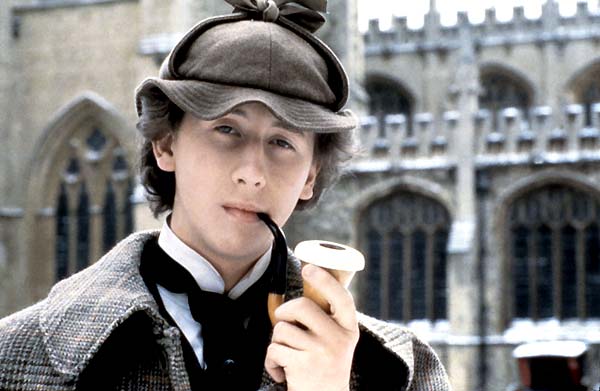
Nicholas Rowe played Sherlock Holmes in 'Young Sherlock Holmes' (1985)

'Young Sherlock Holmes' is a quite endearing little film about the sleuth's schoolboy exploits at boarding school. Far from a masterpiece, yes, but there are some pretty good if a bit dated special effects, the story itself is compelling enough and that ending in particular is very moving, if a bit out of place with the rest of the film.

Playing a young Sherlock Holmes, Rowe does benefit a bit from already having the look of a young genius nailed down to a tee, with a bit of difference from other portrayals via that youthful mischeveousness and emotional impulsiveness he brings to the role, which makes sense since this Holmes has not firmly asserted himself as the world's greatest consulting detective yet, and still retains the right amount of boyishness to his portrayal. It's no great challenge I suppose but Rowe does well enough in making Holmes a realistic teenager but not a particularly normal one, the eccentricities are there definitely, but they seem more of an act than anything, and Rowe is much more downplayed in showing them than per the usual portrayal, which is the right way.

Another interesting aspect of this performance is his relationship with Elizabeth Hardy (a very good Sophie Ward) and Watson (a quite endearing little Alan Cox). With Elizabeth, his love interest, it's interesting to see a warmer portrayal of Holmes who's actually capable of being quite a sweet boyfriend. Rowe doesn't overplay the romance but rather, he and Ward generate a very low-key chemistry that's more friendly than overly passionate, and never distracts from the main story at hand. With Watson there's a little less of that usual sardonic berating by Holmes and instead a more kinder form of friendship, Watson being the timid retiring sort and Holmes as, effectively, his big brother figure. Rowe similarly has a low-key sort of affection for Cox's Watson but differentiating it a bit by showing a bit more protectiveness of him, laying the seeds for his development of their chemsitry together that works quite well.

Lots of the film consists of just one fun little chase after another, and they all really depend more on Barry Levinson's direction than Rowe really, but that's fine as it's all pretty effective. Rowe is consistently effective as Holmes throughout the film till his final scene with SPOILERS Elizabeth dying in his arms. He's actually very moving, low-key yes but quite heartbreaking, in expressing not only the loss of love but a complete shutting off of any future personal connections. He's a 3.5 for most of his performance, a strong one at that, but that scene really does make me consider bumping him up to a 4 for the near future. For the timebeing though,

Nicholas Rowe in 'Yong Sherlock Holmes' (1985): 3.5/5
http://www.wearysloth.com/Gallery/ActorsS/16477-15269.gif
http://filmfanatic.org/reviews/wp-content/uploads/2012/02/Seven-Percent-Williamson.png
http://i61.tinypic.com/167p4xd.jpg
http://de.web.img3.acsta.net/medias/nmedia/18/66/82/31/18957632.jpg


FINAL RANKING OF ALL THE SHERLOCK HOLMES PORTRAYALS (bar Brett):

9. Robert Stephens in 'The Private Life of Sherlock Holmes' (1970): 3/5

8. Robert Downey Jr. in 'Sherlock Holmes' (2009) and 'A Game of Shadows' (2011): 3.5/5

7. Nicholas Rowe in 'Young Sherlock Holmes' (1985): 3.5/5 (verging on a 4)

6. Peter Cushing in 'Hound of the Baskervilles' (1959): 4/5

5. Nicol Williamson in 'The Seven Per Cent Solution': 4/5

4. Ian Richardson in 'The Sign of Four' (1983): 4/5

3. Basil Rathbone in 'Hound of the Baskervilles' (1939): 5/5

2. Benedict Cumberbatch in 'Sherlock' (2010 - ): 5/5

1. Ian McKellen in 'Mr Holmes' (2015): 5/5

Thursday, 9 July 2015

Head-to-Head: Sherlock Holmes Part 2 (Robert Downey Jr. v.s. Benedict Cumberbatch v.s. Ian McKellen)

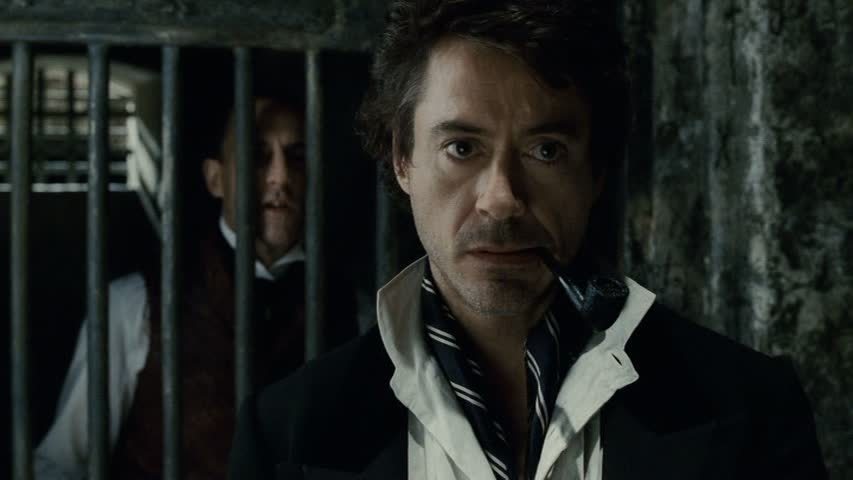
Robert Downey Jr. played Sherlock Holmes in the Guy Ritchie series, 'Sherlock Holmes' (2009) and 'A Game of Shadows' (2011)

I like Guy Ritchie well enough as a director generally, but he does have a tendency to go overboard with his stylistic choices quite frequently in films. His 'Sherlock Holmes' series is no exception as each and every scene is directed and paced with such kinetic, frentic and disordered energy that it really comes across as quite dizzying, verging upon annoying. They're decent enough action films but the mysteries are quite ludicrous, the suspension of disbelief required is more like a complete upheaval of it, and its treatment of female characters seems to be, to say the least, rather indifferent. The first film is actually a fun enough ride, and the second has its moments, particularly with Jared Harris and Stephen Fry's good performances as Moriarty and Mycroft, respectively. But beyond some cool setpieces and effects, there's just not much there.

Robert Downey Jr.'s portrayal of Holmes here is not particularly complex. He's a neurotic, snarky, paranoid, drug-addled, flirty and overall rather oddball sort but to be quite frank, when you get down to it it's pretty much Tony Stark with a British accent and more overt and excessive mannerisms to show the ECCENTRICITIES of Holmes. Now I'm not criticising this as a mannered performance at all as many of Downey Jr.'s greatest performances ('Chaplin', 'Tropic Thunder', 'Natural Born Killers', 'Less than Zero') are incredibly mannered performances too. I will say though that in those films it feels like he's trying to create a character through those mannerisms whereas here it feels he's coasting a bit on his quirk and charm? And in this respect I don't think it pays off as well as in say the 'Iron Man' series, or 'Kiss Kiss Bang Bang', where he finds ways to both imbude his natural charisam Poitier-style into similar characters but with alternately badass/comic bents. What I mean to say is that Downey Jr., one of the best actors working today whenever he tries and still a good one when he doesn't, kind of just does all these little odd quirks with his character and just calls it a day. So like Johnny Depp post-Jack Sparrow, although at least Downey Jr. chooses good films to he in. And he also has good chemistry with Jude Law's John Watson; but then again, I've always seen that as being more the actors themselves having great camaraderie, rather than actually finding its way into the characters a la 'Angels with Dirty Faces' style. Feel free to disagree with me.

Downey Jr. handles oddball Holmes well enough yes, and is also good in the action scenes, and whenever the film delves a bit deeper into the darker side of plot and psyche he's always more than up to task. He's never bad, and he makes it convincing that this Holmes is this extent of brilliant and that extent of badass, but I can't help but wish I could see Downey Jr. play the sleuth in a more subdued version of the sleuth's escapades. As it is, he's a solid enough action hero and an interesting enough ball of quirk.

Robert Downey Jr. in 'Sherlock Holmes' (2009) and 'A Game of Shadows' (2011): 3.5/5


Benedict Cumberbatch is playing Sherlock Holmes in the television series 'Sherlock' (2010- )

'Sherlock' is now officially one of my all-time favourite television series. I particularly love how for once, Dr Watson is not just a foil but a perfectly competent and fascinating character in his own right. It's a brilliant dynamic which drives the series, which has oundles of clever and crisp writing, ingenius updating of Conan Doyle's stories whilst retaining the original brilliance, and fleshing out the supporting characters and subplots verhy well. If I have any reservations about the series, it'd be that it's a bit too clever for its own good sometimes. Then again, does it not warrant that already by having at its centre, Benedict Cumberbatch's portrayal as a self-confessed 'high-functioning sociopath' of Holmes, who may well be the cleverest Holmes of them all?

I would say this version of Holmes is above all almost inhuman in his abilities, and the mere fact that in Cumberbatch's hands it never feels unrealistic that this Holmes can track taxis down by a mental GPS, has seemingly omniscient vision of his surroundings, and can pinpoint seemingly unrelated facts and clues at whim, is a grand achievement in itself. From the very first episode, the assured manner in which both actor and character carry themselves, demostrates just how comfortable Cumberbatch is in the role. There's firstly that intelligence which I suppose is already an intangible to most of Cumberbatch's performances (I mean, could anyone really buy for a second his performance in 'August: Osage County'?). He goes beyond that though by pairing this intelligence with a neverending thirst for stimulation for it; like a drug addiction, really. Cumberbatch could've gotten away by just playing Holmes as supremely smart, that baritone intonation really speaks for itself, by making sense of it all through that unquenchable drive. Instead of just being a self-aware and self-indulgent genius, Cumberbatch makes him an impulsively selfish being who is all the more brilliant to it.  This Holmes is just awesome in that he almost always has an answer for everything, and even if he doesn't, he'll find a way. You always see the gears working in this portrayal not of the acting, but of the intellectual ballast of Sherlock Holmes whenever Cumberbatch, in action or sitting down in seeming passivity, is on the ball. In just simply conveying Holmes as a genius, Cumberbatch is incomparable.

It's an incredible intensity which Cumberbatch gives to Holmes which makes no mistake of showing him to be a largely insufferable and makes it evident why many would consider him to be a 'freak'. What Cumberbatch does very well is showing that it's not all down to his sociopathy, that certainly plays a role as we often see him parlay it for investigative purposes. Strikingly so in his interactions with the police force and crime scenes where he shows almost a lack of interest in the human quantity of the cases, preferring instead to show excitement and inappropiate fascination with the means to the end, rather than the ends in themselves. 'The Hounds of Baskerville' is perhaps the most evident example of Cumberbatch using Holmes as a shameless manipulator, who tricks everyone and turns the tables on everything without any empathy whatsoever, just to get to the bottom of things. In this respect I think Martin Freeman (an excellent performance as John Watson) and him work extremely well with one another because the former has just such a unassuming and sweet nature about him that they merge into one very odd couple, that helps to measure and balance both actors' strengths and pit them both against and in accordance with one another. They're a convincing team and more importantly, so very fun to watch; Cumberbatch and Freeman are

Again Cumberbatch seamlessly merges these sociopathic qualities with the more unwitting and more sympathetic elements of his social awkwardness. For example, Louise Brealey's Molly (a very underrated performance, in my opinion) displays a strong and not very subtle attraction to Sherlock, which sets up many of the fascinating beats of Cumberbatch's performance which shows him almost trying to replicate normal, sociable human behaviour, only to be offset by his intrinsic lack of understanding of these norms. Whether he's trying to charm her into letting him see a body in the mortuary, confusion over Irene Adler (Lara Pulver) and her seductive methods, or failure to comprehend why people are crying at a wedding speech he's making etc. Cumberbatch imbeds a streak of awkwardness to his portrayal that's both very believable and also rather endearing and entertaining. I wouldn't call him the funniest Sherlock (that'd be Rathbone, in my opinion), but Cumberbatch's portrayal of Holmes is certainly not lacking in humour. A lot of it is black humour, involving among other things, a severed head in a fridge, jokes about murder, and in 'The Great Game' snarky remarks made while EXPLOSIVES ARE ABOUT TO GO OFF, and a lot of it could have come across as off-putting were Cumberbatch not so good in delivering these lines. A master of the deadpan, his quirks never come across as enforced, unnatural or superfluous because Cumberbatch inserts them all into the flow of his characterization and the plot so effortlessly that it becomes just another aspect of Holmes that is rather endearing.

Also, regarding this Holmes' characterization, he's cold but not heartless. Though professing to see each case on its own as just another puzzle, just another game, whenever betrayal or loss of life in relation to himself ensues, Cumberbatch knows how to put an appropriate degree of emotion into these moments. They're often brief reaction shots but Cumberbatch does well to make an impression in these scenes. Martin Freeman gives the more emotional performance in the series an he's amazing (I'll stop there), but Cumberbatch is certainly no slouch in some of these weightier moments. What I love most of all is that even in moments where he's holding up that steely front of condescension and intelligence he's not unsuspectible to slights and attacks. For example in the episode 'The Blind Banker' when remarked upon as being 'hated' by his old schoolfriends, he shows hints of hurt and sadness, showing that deep inside this Holmes there's a lonely little man, making his friendship with Watson ring all the more resonantly and powerfully. Perhaps best of all though is his handling of his character at wit's end at the end of season 2, 'Reichbach Fall'. As his reputation gets gradually torn apart by Moriarty, Cumberbatch's portrayal of Holmes beginning to let cracks in his hide become prominent is simply magnificent. I never knew I could be so moved at a portrayal of Holmes before Cumberbatch and McKellen's portrayals; they've certainly found incredible depths for the characters.

It's the little things which really make this a great performance for Benedict Cumberbatch. He's perfectly cast, yes, the whole way the series is devised is pitch-perfect for his portrayal; but can anyone besmirch that, seeing as how brilliantly he's attuned himself into it, and never forgetting to add just a bit more to the character? I am not the biggest fan of Cumberbatch generally (I find him a fine but somewhat overrated actor who does some of the same schtick over and over again), but here he's incredible. He may well be the Aaron Paul sort who can only ever play one sort of character, but like Rathbone, what a glorious sort of character it is.

Benedict Cumberbatch in 'Sherlock' (2010 - ): 5/5


Ian McKellen played Sherlock Holmes in 'Mr Holmes' (2015)


'Mr Holmes' is my favourite film of 2015-2016 so far (albeit with a strong contender in the form of 'Mad Max: Fury Road'). It has flaws (Laura Linney's 'accent', a couple of slow patches, the storytelling structure gets a bit muddled at certain points), but none of them distract from the fact that it is overall, a most excellent and finely made film. Bill Condon, taking a similar approach to his earlier 'Gods and Monsters' (also starring McKellen, there as horror director James Whales), depicts an elderly Sherlock Holmes, haunted by his past and searching amidst his waning memory for a few last clues to solve an unresolved case. It's an incredibly quiet and understated film which may not work for everyone but it certainly did for me.

I mention 'Gods and Monsters' because McKellen's performance here actually follows very similar beats in his portrayal of Holmes to Whale. Both are nostalgic and intelligent men whose best days are past them, the difference I would say though is that Whale was depicted as a charismatic, energetic and hedonistic fellow even in old age, when we are first introduced to McKellen's Holmes he's depicted as a gruff, miserly but not wholly so, and most importantly rather tired old man. McKellen uses mannerisms to age himself even further beyond his years with his grunts and huffs and puffs; this is certainly a mannered performance but it works beautifully in accentuating the wear, tear and history of Holmes. There's an insensitivity and sense of broken pride to every movement and word he says in these initial 'present-day' scenes that's never very overt, because this elderly Holmes is a fairly reserved man, but still evident because McKellen is just so good at showing this very precise manner of man. Yet he refuses to keep the audience entirely at a distance. What's amazing is that McKellen doesn't exactly generate warmth to the character but rather a sort of weakness to this Holmes, we haven't even seen anything of his past yet and yet we can tell that he's a shell of his former self and thus, perhaps more open to normal human interaction than he ever would've been.

I'll get into more about Holmes' past in a bit, but for the timebeing let's look at his 'elderly' Holmes characterisation. Now in these initial stages I would say McKellen has the greatest challenge out of any Holmes, which is to suggest brilliance through implication. What I mean by this is that though this Holmes passes his days tending to bees and chatting with his housekeeper's sweet young son, Roger (Milo Parker, in a very naturalistic child performance), the story necessitates that he show whatever remnants of the former brilliance he still has despite having imposed upon himself exile and disconnect from the rest of the world. In this respect McKellen is great. The onset of dementia is of course marvellously played as an increasingly weakening factor in his slow descent, but at the same time brings out the determination, and hints of his former passion for sleuthing, in his portrayal. The inquisitiveness he brings to just a pleasant conversation here, a sweeping look or glance there, shows that while he may be in retirement, his brian is forever trying to piece together mysteries both big and small, none more than the one that haunts him most, the one that drove him to his retirement. The initial stages of his investigation set up many very effective scenes with Parker, in which the latter effectively plays a replacement Watson in discussing the finer points of little clues around Holmes' study which may link him back to his past. In these scenes there is a restoration of some semblance of joy and enthusiasm in Holmes which McKellen beautifully paints.

Yet he never becomes a stereotypically cheery old grandfather figure as there is always that element of his past behind him. A particularly great scene of his involves him sitting in a cinema, watching a fictional depiction of Holmes (by Nicolas Rowe no less, who played a schoolboy Sherlock Holmes in 'Young Sherlock Holmes'--talk about meta casting), a clear parody on the earlier Holmes films which depicted Holmes as heroic and always succesful to no fault. Now this deconstructive nature of this scene may have not worked as well, or not worked at all, in other hands (especially for one like me who loves some of those old flicks with Rathbone), but McKellen plays it beautifully. On one hand he scoffs at it and criticizes it for being a complete fallacy, on the other hand there's an inner pain which implies at both shame at not being the man whom people have idolized him to be, and even a wish to be more like the onscreen/fictional Holmes, one who gets it right every time. It's amazing how McKellen conveys such a searing sense of pain to each of these nostalgic yet haunted moments without feeling repetitive; each moment in the present is an opportunity for McKellen to portray the man of present and past, and he takes each of them and makes it his own.

Technically speaking the way in which the film switches back and forth starts off in a bit of a muddled style, but thankfully McKellen is at hand to make it a nearly seamless transition. There is no sense of disconnect at all between past and present, and yet also such a clear line of distinction between the two McKellen doesn't just leave to the makeup. The Holmes of the past is by no means any typical Holmes, in fact in vein of the aforementioned deconstructive take, he readily admits to not being many of the things Watson describes him as in his novels. Yet despite this honesty there is always that hint of artifice, of arrogance, to his past portrayal which shows the logical astuteness of Holmes, how he very consciously moulds himself around this characteristic of his and is entirely self-assured about it all. McKellen hits these notes flawlessly as he presents a Holmes who is not quite the overly romanticised idea of the detective, nor does he want to be. He brings the right sort of realism to his portrayal of a supremely logical man by never overdoing the intellect of the man, but instead subtly weaving it into his general disposition towards not only his cases, but life in general.

McKellen's most subtle moments of acting are involved in the scenes where he has to track down the troubled wife of a client (an brief but amazing performance by Hattie Morahan). Within his often silent reactions to his deductions and sleuthing McKellen speaks volumes through just a glare or stare to show the brilliance of the man. The high points, however, are when he finally confronts the young wife and gives her the 'final solution' to her problems. In this scene McKellen alternates from being a charming old man, a willing listener, and finally to a cold, unsympathetic and highly logical man. He mends this different aspects of character wonderfully and the effect is incredibly effective. McKellen, by slowly stripping away the character's shield of logic, makes it all the more heartbreaking when he takes it up once more and denies human contact in favour of logic. He brilliantly plays (without spoiling too much) how Holmes has slipped out of this former self and into his present self, by so unsettlingly and movingly showing how this final case has broken him, and helps to set up (chronologically) the big dramatic scenes of the story.

I suppose it was always to be expected that McKellen would bring more than just the intellectual brilliance of Holmes to the role, but it really did surprise me just how emotionally volatile his performance gets at times. The 'present' scenes of the film, where Holmes has suffered the repercussions of approaching matters of the heart and companionship as matters of logic, are where McKellen gets his technically speaking, 'Oscar-y' scenes. I won't call them that because they are so, so much more than that, they are probably the greatest scenes of acting I've ever seen from McKellen, and no hyperbole, of any depiction of old age. The scenes in which he struggles about looking for natural remedies to help recover his memories, and tries to remember what it is he's seeking, are just incredible, as are the subtle hints of him agonizing over his increasingly poor memory. Even greater are the scenes where he's entirely helpless, succumbing to pain and needing the help of others to stand, walk and even talk. McKellen is just so hard to watch here because he's so great at doing this.

His best scenes in this respect are however, two particularly moving scenes. One where he calls out Roger for attacking his mother over their menial position in life. Linney is great in this scene in showing how deeply her son has huty her, Parker's Roger is also effectively nasty but in the right, childish sort of way, but it is McKellen who brings the real power into the scene by showing how years of being cold and distanced from people have shown him that it's not the way. The other is the breakdown scene. I won't get into all the finer little details since I don't want to spoil the film for anyone (just watch the film), but it is well earnt by both film and actor and McKellen. It's particularly disconcerting to see Sherlock Holmes break down in tears, and though it's actually a fairly quiet breakdown in the grand scheme of breakdowns it is also extremely tragic and moving. Within a few moments McKellen reduces his character into a nothingness in terms of logic but overflowing with feeling and sadness, he's terrific.

Most of the Oscar contenders for 2015-2016 have yet to come out yet, and admittedly I think the likes of DiCaprio, Fassbender, Redmayne etc. may have a much greater chance at nabbing the Best Actor statuette. For now, however, it'll take something pretty incredible to knock 'Mr Holmes' off my Best Picture win for the year, and something transcendent to sully my support for McKellen to take home the Oscar for his work as Sherlock Holmes which is a rarity; a performance that is even more brilliant than advertised.

Ian McKellen in 'Mr Holmes' (2015): 5/5


Photo credits:
fanpop.com
radiotimes.com
www.out.com

Monday, 6 July 2015

Head-to-Head: Sherlock Holmes Part 1 (Basil Rathbone v.s. Peter Cushing v.s. Ian Richardson)

Before I get into the reviews, I should note that each and every actor who's played Sherlock Holmes not only has to make the detective his very own creation, but also must contend with the film itself in the right way, and fit in with the thematic and structural approach. The following five portrayals all approach the character of Holmes in very distinctive, different ways, and are all equally interesting to talk about. For the timebeing I'll be getting into 3 performances of Holmes I am perhaps most well-acquainted with due to recent re-watches...

Basil Rathbone played Sherlock Holmes in 1939's 'The Hound of the Baskervilles', as well as in 13 subsequent films in the series.


The 1939 version of 'The Hound of the Baskervilles' is, fitting in with the general stratosphere of filmdom in that particular year, an excellent and highly influential adaptation of perhaps Sir Arthur Conan Doyle's most famous Holmes story, centered on the deerstalker donning detective's investigation of a most unusual case of attempted murder on the moors of Devon, and the possible supernatural connotations of a mysterious local legend in the mix. Sidney Lanfield's direction is incredibly assured, with some very effectively held moments of tension, and the Devon moors are made good use of by the superb cinematography and lighting generating a simultaneously oppressive yet expansive setting for the characters to inhabit. Some of the writing is fairly on the nose in terms of exposition, admittedly, but that can be forgiven as the script is otherwise very flowing and well-written.

There were many more films released for this series by 20th Century Fox and Universal Studios, a few of which I've seen and are decidedly hit and miss in terms of entertainment value and storytelling quality; one constant throughout them all were Basil Rathbone and Nigel Bruce as Holmes and his (in this incarnation) bumbling, jovial sidekick Dr Watson. Before getting into this particular series I'd always envisaged Leslie Howard as being the perfect Holmes for this time period, owing to the fact that I'd always been a massive fan of Howard's cool, calculating and slyly charismatic presence in films like 'Pygmalion', and also my less than favourable opinion of Rathbone from what I'd seen in him thus far. Though possessing an undeniably mellifluous, beautiful speaking voice I'd always found his acting in the likes of 'Romeo and Juliet' and 'The Adventures of Robin Hood' to be, if not particularly bad, not very interesting, a bit on the stiff side, imbuding the right amount of menace for Tybalt and Guy of Gisbourne, but not much beyond that.

Which is precisely why his portrayal of Holmes proved to be such a pleasant surprise for me. In fact, I may well have to revisit some of his other performances now that I've become so enamoured of his Holmes. Rathbone, like Leslie Howard, seems to have hidden depths hitherto unknown in some of his earlier, more stoic performances and when allowed to relax and have fun in a role, actually becomes an incredibly charismatic, fascinating and most importantly, incredibly intelligent incarnation of Sherlock. Some have raised contention with Rathbone, reservations I will address over the course of this review, but I must say personally that from the very moment he's presented to us presiding over the case and bantering with Dr Watson and Mortimer, Rathbone is just pitch perfect as Holmes. Graham Greene's description of Rathbone as the man with a 'knife-edge face and the snapping mouth' is spot on in showing just how perfectly attuned Rathbone's features intrinsically were to visually embodying Holmes. But he doesn't leave it at that--no, Rathbone goes far beyond just the aesthetic to make his Holmes an unforgettable creation.

Unlike some later incarnations, Rathbone's Holmes is actually fairly lighthearted, despite his aquiline features and posh manner, and yet interestingly enough not really that quirky. Now that might be a problem for some, but not for me, for I thoroughly loved that goodnatured humour and affability he instilled into his Holmes' intention. It makes him approachable, and makes sense as to why other characters feel so at ease to entrust their cases to his care. Is it somewhat paradoxical to fuse a mind of mechanically astute logic with such a breeziness of characterization? Perhaps, but Rathbone makes it work so well with his charisma and above all, his masterful intertwining of this charm with intellect. This Holmes has a genuine interest in not only solving crimes but also the whole process of it, and it's just a great deal of fun watching him go about doing his thing even when it''s not really all that consequential to the plot.

Nigel Bruce's Watson has been retrospectively chastitised by some Holmesian scholars for taking too avuncular an approach to Dr Watson, who in the novels is every bit as resourceful if not nearly as intelligent a figure as Holmes. Well to this I say: what works for the books, works for the books, but what works for the film works for the film. What I mean to say is that Bruce's idiotic performances in some of the later films do nothing to diminsih his lovable portrayal of the ideal friend Watson here, which works wonders in merging with Rathbone's portrayal as the two have such excellent chemistry together. I particularly like the scene where they discuss the intricacies of a cane left behind by Dr Mortimer, and the comic payoff of Watson completely fluffing his guess up; Rathbone's reaction in this scene is priceless. I also love their brief but very funny arguments over Holmes' affinity for the violin; really these little comic interludes could have come across as extraneous but instead, they're always thoroughly fun to watch. Although I must say the best comedic touch to this portrayal of Holmes is the peddler disguise he takes on to sneak around the moors. Rathbone is not only hilarious but also utterly convincing in playing this doddering, raspy voiced, country accented fellow, and the payoff of this particular joke is marvellous by just how seamlessly Rathbone slips back into his usual pedantic, intelligent self, cheerfully mocking Watson.

Now I like Rathbone's lighthearted side of his portrayal a great deal, but that's not to say he keeps Sherlock on this one note throughout. When the going gets serious Rathbone wisely tones down the humour and becomes more incisive and contemplative in his portrayal. What I love about his portrayal is that he's never downright calculating or overtly manipulative, and yet he shows these aspects of his persona just by very fleeting glimpses and the precision with which he makes with every movement. And yes, while my favourite parts of his performance are indeed his banter with Nigel Bruce's Watson, I also think he does a great deal to lend weight to the proceedings of the mystery, infusing his investigations with the suitable mystery they require, while retaining that analytic precision to each and every delivery to show that he's always on the ball. He even manages to make the central romance between the lackluster Richard Greene as Sir Henry Baskerville and the okay but not particularly noteworthy Wendy Barrie as his love interest, resonate a lot more than it really deserved to by the conviction he and Bruce give to rescuing them from their predicament. This is a performance I thoroughly enjoyed watching throughout, carrying the film so very well and embodying the sleuth so vividly that even when he's not onscreen, you feel like Holmes is just around the corner, waiting to pounce or perhaps, just jovially banter awhile with you.

I was torn between a 4.5 and a 5 because it's not really the most complex of characters, and he's actually only onscreen for just barely over half of the film's running time, but in the end I decided, I love this performance in the same way I love William Holden in 'Stalag 17', he brings Holmes out to his fullest, he dominates the screen with every second of his performance, so why deny him what is rightfully his?

Basil Rathbone in 'The Hound of the Baskervilles' (1939): 5/5


Peter Cushing played Sherlock Holmes in 1959's 'The Hound of the Baskervilles', as well as in Season 2 of 'Sherlock Holmes' (1965-1968) and 'The Masks of Death' (1984) with John Mills as Dr. Watson.


This particular version of 'The Hound of the Baskervilles' is a Hammer Films production, thus naturally it places far more emphasis on the Gothic/Horror elements than the 1939 version. It's certainly incredibly beautiful to look at with its Technicolor cinematography and overall it's a very compelling experience, in particular the opening prologue is incredibly viscreal and unnerving. Baskerville Hall is, in particular, a marvel of foreboding colours and masterful design, and have I mentioned how beautiful the film is to look at? I enjoyed watching it even if I never really loved it, so to speak.

One thing I do rather like about this adaptation is that it in no way tries to ape the original elements of the 1939 version. Cushing's performance and indeed, Andre Morell as Watson (funny to note I've just covered the two of them for their performances in '1984') are rather indicative of this. Morell, particularly, seems rather keen from the outset to distance himself from Nigel Bruce's portrayal by portraying Watson as quite a capable, clever and rather dashing figure (forming a bit of an early precursor to Jude Law actually), charming and certainly more so than Cushing's Holmes actually who's rather stoic and for the most part, a bit charmless. There's two ways of looking at this performance, either that Cushing is playing Holmes as a priggish stiff who goes about tasks mechanically, or a grumpy sort who distances himself from warmth and amicability in order to focus on the case at hand. I personally go with the latter, though there is a streak of priggishness, Cushing's Holmes is predominately an irritable, arrogant sociopath. Like Rathbone, Cushing's lean and mean features were born to play Holmes, and he certainly makes good use of it by having his performance falling in the same vein. His Holmes is has much waspish energy and dynamic to his interactions with other characters as Cushing mostly stays on this one note of subtle condescension and self-assuredness, not very charming yes, but entirely in line with the film's depiction of the character as a blunt but brilliant sort of chap.

His fast-paced delivery as Holmes certainly takes a bit more getting used to than Rathbone's equally quick but perhaps more languid approach to Conan Doyle's language, I have no reservations with it however as it very nicely accentuates the innate intelligence of Cushing's Holmes. Indeed the main meat of Cushing's performance resides in character creation. The way he smokes his pipe, sits in a chair, the manner in which he contorts his body when listening and speaking showing that he's always on the lookout for clues, may be distracting to some and even overly mannered, but I personally found them to be quite effective. A less towering presence than Rathbone, it makes perfect sense for Cushing to approach his role with more in the way of tics and mannerisms and it certainly does do its job, I can't say I loved them (well no, I actually do love the way he smokes his pipe, it's so damn classy), but I liked them all.

One thing remarkable about this particular adaptation is the depth it gives to Henry Baskerville. Not so much the writing itself really, but rather the performance of Christopher Lee who in my opinion, kind of steals the show with his intriguing performance as a romantic lead, with a twist. Lee and Cushing have a cool but effective rapport between the two that was rarely ever explored in the other Hammer films where the two were perenially at each others' necks, so to speak. Lee does have the more interesting arc to explore, for once he's not some hulking monster to be ridden off but instead, a slowly warming up presence who has some nice romantic chemistry with Cecile Stapleton (played well by Marla Landi). In this sense Lee kind of steals the show away from Cushing a bit, though I must emphasise Cushing is still very good, it's just that Lee is there to make up for his momentary disappearance from the middle. I should also note that unlike Rathbone he doesn't get a comic re-entrance into the proceedings, that probably wouldn't make much sense and be a bit tonally jarring with the rest of the film because Cushing's Holmes is also particularly badass, I mean he kills a poisonous taurantala, Dracula's life is in his hands, he slinks around with a cape, he makes looking through a magnifying glass akin to a cold stare of death (Cushing's piercing blue eyes were made to bare down into the souls of men), I'm not taking the piss you really would not want to mess around with Cushing's Mr Holmes.

The final moments of the film where the who of the whodunnit is revealed is probably one of the louder sections of the film but it works, however, due to the work of Lee and Landi. The two actors develop their relationship far better than Greene and Barrie and it all sets up a very satisfying yet heartbreaking final denouement. I can't help but wish Cushing had a bit more of a role in these moments as Cushing is most certainly sidelined, he doesn't really get a hand in any of these dramatic beats. I do love what Cushing does within these restraints though as his calm and collected reaction shots do a lot to add to the overall flavour of the disconcerting tone of these final scenes. I mentioned that Cushing is a badass, well none more so than when he fires a perfect point blank shot at the Hound itself, though Watson gunning down a certain someone else is very close on the badassery scale. All in all this is a very good performance by Peter Cushing, who's gradually rising up on my list of underrated actors, the true power of the film lies elsewhere, but it's still an incredibly effective portrayal of Holmes.

Peter Cushing in 'The Hound of the Baskervilles' (1959): 4/5


Ian Richardson played Sherlock Holmes in 'The Sign of Four' (1983), and in the same year 'The Hound of the Baskervilles'


I have indeed seen the Ian Richardson version of 'The Hound of the Baskervilles' but it's been a while, and have not been very succesful in salvaging a copy of it anywhere. From what I can recall Richardson gave an effective performance as Holmes, with that usual sort of playful omniscience and calculation, nothing incredibly groundbreaking and treading on somewhat similar ground of both Cushing and Rathbone, in fact I'd go so far to say as mending the two portrayals together. I'd give him a 4 in that from what I remember, though a re-watch will most certainly be needed in the near future. Donald Churchill's Watson wasn't much to speak of from what I remember, not much more than just a faint impersenation of Nigel Bruce, and I can't remember much about Brian Blessed, Martin Shaw, and Denholm Elliot though I'm sure they were fine, as always.

Instead of just relying upon a wavering memory, I thought instead, why not look at the other Ian Richardson performance as Holmes in 'The Sign of Four', a decidedly different story. I would not call this a great adaptation of a Holmes story as is certainly lacks the distinctiveness of the previous two I'd described. I do like the Columbo-esque procedural approach it takes throughout though as for once we get a separate perspective of the case not from Holmes/Watson's POV, as well as additional insight into how exactly Holmes goes about picking up the pieces. There's some questionable scenes and writing throughout, especially how it adds a lot more in the way of setpieces and thrills and romance, at the risk of completely diminishing the novel's original impact, but it's largely forgiveable due to the intrinsic strength of the story. In short: not a very faithful adaptation, but good nevertheless. It's centered around some valuable jewels which intertwine murder and malice amongst a one-legged prisoner and his cahoots, a lovely daughter of a murdered Captain, a strange man named Tonga and overall just a whole cast of oddities and bestial malice.

As aforementioned, Richardson's character creation hinges a lot on what Tim Prasil on 'In the Shadow of Basil Rathbone' (https://timprasil.wordpress.com/) calls the 'impish mischievousness at odds with Watson’s description of a man more machine than human'. Richardson is by no means the classical embodiment of Holmes because he's just too spry and fun-loving, but I can definitely see where he's coming from. Speaking to the press about taking on the role of Holmes, he described his depiction as consisting of a 'kind of cool irony'; that's the crucial point here. Richardson's Holmes has a ball with his investigation but remains cool and collected, and whenever the going gets dark (which it does an awful lot here), he follows accordingly with a more sombre approach, like Holmes is deliberately toning himself down. I particularly like it when he begins differentiating between the concept of an 'abstract' and 'real' problem, jumping between his serious and playful persona and showing there's a different side to Holmes for every choice moment.

He maintains an acrebic, intelligent bent even with the easygoing side of Holmes, a talent Richardson showed in many of his roles from 'Tinker Tailor Soldier Spy' to 'House of Cards'. This is a Holmes who takes genuine pleasure in playing around with science, chemicals and facts, and Richardson makes this work through his performance. I find this to add quite a bit of flavour to the structure of the film which is essentially an extended car-and-mouse chase, I made that 'Columbo' comparison early on because really it's a rather nice way of surmising the whole performance of Richardson: weighty when necessary, but mostly just a nicely attuned, pleasant to watch Peter Falk-esque rendition of a brilliant man who isn't too fussed about too much, and only wishes to complete the game at hand. Now in terms of my reservations towards the film as a whole one of them is the complete neglect of Holmes' drug habit, which was a significant plot point in the novel. Now on one hand, drug addictions often form the crux of many a gratuitous overacting display, on the other hand it's Ian Richardson we're talking about here. He would have probably found some way to parlay it into even more depth for the performance; but this is a massive 'if'. Anyway, regardless, Richardson gives a very good characterization of Holmes that works well, even if not fulfilled to its full potential.

Much of the story centres around Holmes tackling an assortment of oddballs who've been somewhat downsized from the original. I won't go into too much detail about the finer points, but I will say that amongst this sometimes rather messy structure of the proceedings, Richardson is always completely at home no matter how outrageous some of the scenarios get. Unlike most of the cast, Richardson maintains a very consistent characterization throughout the film so that even when it falters, he keeps his head above the water. I really like that he resisted the temptation to go as broad/OTT as the likes of Joe Melia as Jonathan Small, one of the more obvious portrayals of a Sherlockian villain (but it does work for the film), and instead with his continually quiet and subdued approach makes it all work astoundingly well. And though Holmes never really gets big showboating moments like the villains in this tale, Richardson makes good on each opportunity to steal the scene. A brief but memorable moment that really stands out for me is him asking Inspector Layton (played by Terrence Rigby, them Tinker Tailor connections though) 'found something?', only to put a damp on the inspector's parade by revealing that he'd discovered the trap door Layton had prided himself on finding 'first'. That small shit-eating grin just speaks volumes; wonderful, wonderful stuff.

Though I do enjoy the film and performance of Richardson a great deal, I can't help but feel they're slightly at odds at certain points. For instance a long middle stretch involving Richardson v.s. a circus dwarf strikes me as being a bit of a waste of Richardson's talents, as he spends a while esentially doing  a 'man on the run' routine without any real fun to be had. It's interesting to watch and clearly director Desmond Davis had a hell of a time recreating scenes from films like 'The Lady from Shanghai' in the 'hall of mirrors' scene, but I do wish they'd instead spent a bit more time just letting Richardson control the film, instead of having the film's setpieces control him. Although he more than makes up for these lapses by his silent but always incredible reactions to the chaos around him. I often have reservations if a Sherlock is sidelined for too long by action setpieces but hey, Richardson finds a way to get around this here so I guess I shouldn't begrudge the film too much. The ending of the film is a bit lacking for the likes of Watson (no, he doesn't get the girl here) but Richardson is excellent in his final explanation. He lends it the appropriate amount of seriousness, but his best moment is perhaps his laughter at another character's explanation, over where the jewels have gone. 'Oh what a very pretty tale' he smillingly says as he completely tears apart that explanation, and I thought it was the perfect end to a performance that doesn't take itself too seriously and has quite a bit of fun (further emphasised by his final clin d'oeil breaking the fourth wall), and yet works equally well, effectively and astutely when necessary. Far from being Richardson's best performance or most complex role (though it would have been interesting to see his take on say, Nicol Williamson's role in 'The Seven Per Cent Solution'), but still a very solid, occasionally brilliant, performance.

Ian Richardson in 'The Sign of Four' (1983): 4/5


Sherlock Holmes Part 2 will feature: Benedict Cumberbatch, Robert Downey Jr., and Ian McKellen. Stay tuned!


gonemovies.com
maruda3.wordpress.com
timprasil.wordpress.com