Showing posts with label Benedict Cumberbatch. Show all posts

Thursday, 9 July 2015

Head-to-Head: Sherlock Holmes Part 2 (Robert Downey Jr. v.s. Benedict Cumberbatch v.s. Ian McKellen)

Robert Downey Jr. played Sherlock Holmes in the Guy Ritchie series, 'Sherlock Holmes' (2009) and 'A Game of Shadows' (2011)
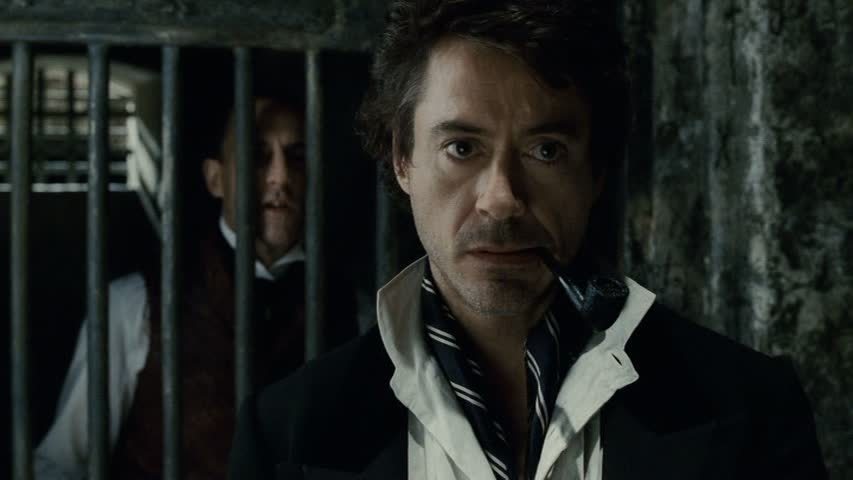
I like Guy Ritchie well enough as a director generally, but he does have a tendency to go overboard with his stylistic choices quite frequently in films. His 'Sherlock Holmes' series is no exception as each and every scene is directed and paced with such kinetic, frentic and disordered energy that it really comes across as quite dizzying, verging upon annoying. They're decent enough action films but the mysteries are quite ludicrous, the suspension of disbelief required is more like a complete upheaval of it, and its treatment of female characters seems to be, to say the least, rather indifferent. The first film is actually a fun enough ride, and the second has its moments, particularly with Jared Harris and Stephen Fry's good performances as Moriarty and Mycroft, respectively. But beyond some cool setpieces and effects, there's just not much there.

Robert Downey Jr.'s portrayal of Holmes here is not particularly complex. He's a neurotic, snarky, paranoid, drug-addled, flirty and overall rather oddball sort but to be quite frank, when you get down to it it's pretty much Tony Stark with a British accent and more overt and excessive mannerisms to show the ECCENTRICITIES of Holmes. Now I'm not criticising this as a mannered performance at all as many of Downey Jr.'s greatest performances ('Chaplin', 'Tropic Thunder', 'Natural Born Killers', 'Less than Zero') are incredibly mannered performances too. I will say though that in those films it feels like he's trying to create a character through those mannerisms whereas here it feels he's coasting a bit on his quirk and charm? And in this respect I don't think it pays off as well as in say the 'Iron Man' series, or 'Kiss Kiss Bang Bang', where he finds ways to both imbude his natural charisam Poitier-style into similar characters but with alternately badass/comic bents. What I mean to say is that Downey Jr., one of the best actors working today whenever he tries and still a good one when he doesn't, kind of just does all these little odd quirks with his character and just calls it a day. So like Johnny Depp post-Jack Sparrow, although at least Downey Jr. chooses good films to he in. And he also has good chemistry with Jude Law's John Watson; but then again, I've always seen that as being more the actors themselves having great camaraderie, rather than actually finding its way into the characters a la 'Angels with Dirty Faces' style. Feel free to disagree with me.

Downey Jr. handles oddball Holmes well enough yes, and is also good in the action scenes, and whenever the film delves a bit deeper into the darker side of plot and psyche he's always more than up to task. He's never bad, and he makes it convincing that this Holmes is this extent of brilliant and that extent of badass, but I can't help but wish I could see Downey Jr. play the sleuth in a more subdued version of the sleuth's escapades. As it is, he's a solid enough action hero and an interesting enough ball of quirk.

Robert Downey Jr. in 'Sherlock Holmes' (2009) and 'A Game of Shadows' (2011): 3.5/5


Benedict Cumberbatch is playing Sherlock Holmes in the television series 'Sherlock' (2010- )

'Sherlock' is now officially one of my all-time favourite television series. I particularly love how for once, Dr Watson is not just a foil but a perfectly competent and fascinating character in his own right. It's a brilliant dynamic which drives the series, which has oundles of clever and crisp writing, ingenius updating of Conan Doyle's stories whilst retaining the original brilliance, and fleshing out the supporting characters and subplots verhy well. If I have any reservations about the series, it'd be that it's a bit too clever for its own good sometimes. Then again, does it not warrant that already by having at its centre, Benedict Cumberbatch's portrayal as a self-confessed 'high-functioning sociopath' of Holmes, who may well be the cleverest Holmes of them all?

I would say this version of Holmes is above all almost inhuman in his abilities, and the mere fact that in Cumberbatch's hands it never feels unrealistic that this Holmes can track taxis down by a mental GPS, has seemingly omniscient vision of his surroundings, and can pinpoint seemingly unrelated facts and clues at whim, is a grand achievement in itself. From the very first episode, the assured manner in which both actor and character carry themselves, demostrates just how comfortable Cumberbatch is in the role. There's firstly that intelligence which I suppose is already an intangible to most of Cumberbatch's performances (I mean, could anyone really buy for a second his performance in 'August: Osage County'?). He goes beyond that though by pairing this intelligence with a neverending thirst for stimulation for it; like a drug addiction, really. Cumberbatch could've gotten away by just playing Holmes as supremely smart, that baritone intonation really speaks for itself, by making sense of it all through that unquenchable drive. Instead of just being a self-aware and self-indulgent genius, Cumberbatch makes him an impulsively selfish being who is all the more brilliant to it.  This Holmes is just awesome in that he almost always has an answer for everything, and even if he doesn't, he'll find a way. You always see the gears working in this portrayal not of the acting, but of the intellectual ballast of Sherlock Holmes whenever Cumberbatch, in action or sitting down in seeming passivity, is on the ball. In just simply conveying Holmes as a genius, Cumberbatch is incomparable.

It's an incredible intensity which Cumberbatch gives to Holmes which makes no mistake of showing him to be a largely insufferable and makes it evident why many would consider him to be a 'freak'. What Cumberbatch does very well is showing that it's not all down to his sociopathy, that certainly plays a role as we often see him parlay it for investigative purposes. Strikingly so in his interactions with the police force and crime scenes where he shows almost a lack of interest in the human quantity of the cases, preferring instead to show excitement and inappropiate fascination with the means to the end, rather than the ends in themselves. 'The Hounds of Baskerville' is perhaps the most evident example of Cumberbatch using Holmes as a shameless manipulator, who tricks everyone and turns the tables on everything without any empathy whatsoever, just to get to the bottom of things. In this respect I think Martin Freeman (an excellent performance as John Watson) and him work extremely well with one another because the former has just such a unassuming and sweet nature about him that they merge into one very odd couple, that helps to measure and balance both actors' strengths and pit them both against and in accordance with one another. They're a convincing team and more importantly, so very fun to watch; Cumberbatch and Freeman are

Again Cumberbatch seamlessly merges these sociopathic qualities with the more unwitting and more sympathetic elements of his social awkwardness. For example, Louise Brealey's Molly (a very underrated performance, in my opinion) displays a strong and not very subtle attraction to Sherlock, which sets up many of the fascinating beats of Cumberbatch's performance which shows him almost trying to replicate normal, sociable human behaviour, only to be offset by his intrinsic lack of understanding of these norms. Whether he's trying to charm her into letting him see a body in the mortuary, confusion over Irene Adler (Lara Pulver) and her seductive methods, or failure to comprehend why people are crying at a wedding speech he's making etc. Cumberbatch imbeds a streak of awkwardness to his portrayal that's both very believable and also rather endearing and entertaining. I wouldn't call him the funniest Sherlock (that'd be Rathbone, in my opinion), but Cumberbatch's portrayal of Holmes is certainly not lacking in humour. A lot of it is black humour, involving among other things, a severed head in a fridge, jokes about murder, and in 'The Great Game' snarky remarks made while EXPLOSIVES ARE ABOUT TO GO OFF, and a lot of it could have come across as off-putting were Cumberbatch not so good in delivering these lines. A master of the deadpan, his quirks never come across as enforced, unnatural or superfluous because Cumberbatch inserts them all into the flow of his characterization and the plot so effortlessly that it becomes just another aspect of Holmes that is rather endearing.

Also, regarding this Holmes' characterization, he's cold but not heartless. Though professing to see each case on its own as just another puzzle, just another game, whenever betrayal or loss of life in relation to himself ensues, Cumberbatch knows how to put an appropriate degree of emotion into these moments. They're often brief reaction shots but Cumberbatch does well to make an impression in these scenes. Martin Freeman gives the more emotional performance in the series an he's amazing (I'll stop there), but Cumberbatch is certainly no slouch in some of these weightier moments. What I love most of all is that even in moments where he's holding up that steely front of condescension and intelligence he's not unsuspectible to slights and attacks. For example in the episode 'The Blind Banker' when remarked upon as being 'hated' by his old schoolfriends, he shows hints of hurt and sadness, showing that deep inside this Holmes there's a lonely little man, making his friendship with Watson ring all the more resonantly and powerfully. Perhaps best of all though is his handling of his character at wit's end at the end of season 2, 'Reichbach Fall'. As his reputation gets gradually torn apart by Moriarty, Cumberbatch's portrayal of Holmes beginning to let cracks in his hide become prominent is simply magnificent. I never knew I could be so moved at a portrayal of Holmes before Cumberbatch and McKellen's portrayals; they've certainly found incredible depths for the characters.

It's the little things which really make this a great performance for Benedict Cumberbatch. He's perfectly cast, yes, the whole way the series is devised is pitch-perfect for his portrayal; but can anyone besmirch that, seeing as how brilliantly he's attuned himself into it, and never forgetting to add just a bit more to the character? I am not the biggest fan of Cumberbatch generally (I find him a fine but somewhat overrated actor who does some of the same schtick over and over again), but here he's incredible. He may well be the Aaron Paul sort who can only ever play one sort of character, but like Rathbone, what a glorious sort of character it is.

Benedict Cumberbatch in 'Sherlock' (2010 - ): 5/5


Ian McKellen played Sherlock Holmes in 'Mr Holmes' (2015)


'Mr Holmes' is my favourite film of 2015-2016 so far (albeit with a strong contender in the form of 'Mad Max: Fury Road'). It has flaws (Laura Linney's 'accent', a couple of slow patches, the storytelling structure gets a bit muddled at certain points), but none of them distract from the fact that it is overall, a most excellent and finely made film. Bill Condon, taking a similar approach to his earlier 'Gods and Monsters' (also starring McKellen, there as horror director James Whales), depicts an elderly Sherlock Holmes, haunted by his past and searching amidst his waning memory for a few last clues to solve an unresolved case. It's an incredibly quiet and understated film which may not work for everyone but it certainly did for me.

I mention 'Gods and Monsters' because McKellen's performance here actually follows very similar beats in his portrayal of Holmes to Whale. Both are nostalgic and intelligent men whose best days are past them, the difference I would say though is that Whale was depicted as a charismatic, energetic and hedonistic fellow even in old age, when we are first introduced to McKellen's Holmes he's depicted as a gruff, miserly but not wholly so, and most importantly rather tired old man. McKellen uses mannerisms to age himself even further beyond his years with his grunts and huffs and puffs; this is certainly a mannered performance but it works beautifully in accentuating the wear, tear and history of Holmes. There's an insensitivity and sense of broken pride to every movement and word he says in these initial 'present-day' scenes that's never very overt, because this elderly Holmes is a fairly reserved man, but still evident because McKellen is just so good at showing this very precise manner of man. Yet he refuses to keep the audience entirely at a distance. What's amazing is that McKellen doesn't exactly generate warmth to the character but rather a sort of weakness to this Holmes, we haven't even seen anything of his past yet and yet we can tell that he's a shell of his former self and thus, perhaps more open to normal human interaction than he ever would've been.

I'll get into more about Holmes' past in a bit, but for the timebeing let's look at his 'elderly' Holmes characterisation. Now in these initial stages I would say McKellen has the greatest challenge out of any Holmes, which is to suggest brilliance through implication. What I mean by this is that though this Holmes passes his days tending to bees and chatting with his housekeeper's sweet young son, Roger (Milo Parker, in a very naturalistic child performance), the story necessitates that he show whatever remnants of the former brilliance he still has despite having imposed upon himself exile and disconnect from the rest of the world. In this respect McKellen is great. The onset of dementia is of course marvellously played as an increasingly weakening factor in his slow descent, but at the same time brings out the determination, and hints of his former passion for sleuthing, in his portrayal. The inquisitiveness he brings to just a pleasant conversation here, a sweeping look or glance there, shows that while he may be in retirement, his brian is forever trying to piece together mysteries both big and small, none more than the one that haunts him most, the one that drove him to his retirement. The initial stages of his investigation set up many very effective scenes with Parker, in which the latter effectively plays a replacement Watson in discussing the finer points of little clues around Holmes' study which may link him back to his past. In these scenes there is a restoration of some semblance of joy and enthusiasm in Holmes which McKellen beautifully paints.

Yet he never becomes a stereotypically cheery old grandfather figure as there is always that element of his past behind him. A particularly great scene of his involves him sitting in a cinema, watching a fictional depiction of Holmes (by Nicolas Rowe no less, who played a schoolboy Sherlock Holmes in 'Young Sherlock Holmes'--talk about meta casting), a clear parody on the earlier Holmes films which depicted Holmes as heroic and always succesful to no fault. Now this deconstructive nature of this scene may have not worked as well, or not worked at all, in other hands (especially for one like me who loves some of those old flicks with Rathbone), but McKellen plays it beautifully. On one hand he scoffs at it and criticizes it for being a complete fallacy, on the other hand there's an inner pain which implies at both shame at not being the man whom people have idolized him to be, and even a wish to be more like the onscreen/fictional Holmes, one who gets it right every time. It's amazing how McKellen conveys such a searing sense of pain to each of these nostalgic yet haunted moments without feeling repetitive; each moment in the present is an opportunity for McKellen to portray the man of present and past, and he takes each of them and makes it his own.

Technically speaking the way in which the film switches back and forth starts off in a bit of a muddled style, but thankfully McKellen is at hand to make it a nearly seamless transition. There is no sense of disconnect at all between past and present, and yet also such a clear line of distinction between the two McKellen doesn't just leave to the makeup. The Holmes of the past is by no means any typical Holmes, in fact in vein of the aforementioned deconstructive take, he readily admits to not being many of the things Watson describes him as in his novels. Yet despite this honesty there is always that hint of artifice, of arrogance, to his past portrayal which shows the logical astuteness of Holmes, how he very consciously moulds himself around this characteristic of his and is entirely self-assured about it all. McKellen hits these notes flawlessly as he presents a Holmes who is not quite the overly romanticised idea of the detective, nor does he want to be. He brings the right sort of realism to his portrayal of a supremely logical man by never overdoing the intellect of the man, but instead subtly weaving it into his general disposition towards not only his cases, but life in general.

McKellen's most subtle moments of acting are involved in the scenes where he has to track down the troubled wife of a client (an brief but amazing performance by Hattie Morahan). Within his often silent reactions to his deductions and sleuthing McKellen speaks volumes through just a glare or stare to show the brilliance of the man. The high points, however, are when he finally confronts the young wife and gives her the 'final solution' to her problems. In this scene McKellen alternates from being a charming old man, a willing listener, and finally to a cold, unsympathetic and highly logical man. He mends this different aspects of character wonderfully and the effect is incredibly effective. McKellen, by slowly stripping away the character's shield of logic, makes it all the more heartbreaking when he takes it up once more and denies human contact in favour of logic. He brilliantly plays (without spoiling too much) how Holmes has slipped out of this former self and into his present self, by so unsettlingly and movingly showing how this final case has broken him, and helps to set up (chronologically) the big dramatic scenes of the story.

I suppose it was always to be expected that McKellen would bring more than just the intellectual brilliance of Holmes to the role, but it really did surprise me just how emotionally volatile his performance gets at times. The 'present' scenes of the film, where Holmes has suffered the repercussions of approaching matters of the heart and companionship as matters of logic, are where McKellen gets his technically speaking, 'Oscar-y' scenes. I won't call them that because they are so, so much more than that, they are probably the greatest scenes of acting I've ever seen from McKellen, and no hyperbole, of any depiction of old age. The scenes in which he struggles about looking for natural remedies to help recover his memories, and tries to remember what it is he's seeking, are just incredible, as are the subtle hints of him agonizing over his increasingly poor memory. Even greater are the scenes where he's entirely helpless, succumbing to pain and needing the help of others to stand, walk and even talk. McKellen is just so hard to watch here because he's so great at doing this.

His best scenes in this respect are however, two particularly moving scenes. One where he calls out Roger for attacking his mother over their menial position in life. Linney is great in this scene in showing how deeply her son has huty her, Parker's Roger is also effectively nasty but in the right, childish sort of way, but it is McKellen who brings the real power into the scene by showing how years of being cold and distanced from people have shown him that it's not the way. The other is the breakdown scene. I won't get into all the finer little details since I don't want to spoil the film for anyone (just watch the film), but it is well earnt by both film and actor and McKellen. It's particularly disconcerting to see Sherlock Holmes break down in tears, and though it's actually a fairly quiet breakdown in the grand scheme of breakdowns it is also extremely tragic and moving. Within a few moments McKellen reduces his character into a nothingness in terms of logic but overflowing with feeling and sadness, he's terrific.

Most of the Oscar contenders for 2015-2016 have yet to come out yet, and admittedly I think the likes of DiCaprio, Fassbender, Redmayne etc. may have a much greater chance at nabbing the Best Actor statuette. For now, however, it'll take something pretty incredible to knock 'Mr Holmes' off my Best Picture win for the year, and something transcendent to sully my support for McKellen to take home the Oscar for his work as Sherlock Holmes which is a rarity; a performance that is even more brilliant than advertised.

Ian McKellen in 'Mr Holmes' (2015): 5/5


Photo credits:
fanpop.com
radiotimes.com
www.out.com

Thursday, 11 June 2015

Head-to-Head: Tinker Tailor Soldier Spy, 1979/2011. The Scalphunters (Michael Jayston v.s. Benedict Cumberbatch, Hywel Bennett v.s. Tom Hardy, Ian Bannen v.s. Mark Strong)

An adaptation of a John le Carré novel is always an interesting proposition and prospect. The excellence of the source material is never in doubt; nobody crafts a spy thriller quite as well as Mr Le Carré does, whose years of experience in the MI5 and MI6 have lent him insight and experience into the workings of espionage to coalesce with his wonderfully precise prose style. The main hurdle for adaptations is actually the core strength of his novels. The subdued, often internal intensities of his stories, revolving more often around the psychological than (as was the norm for spy fiction) the physical, they're hardly Fleming-esque in their adaptability for the general populous. No fancy gadgets and lovely ladies, magnificent set-pieces in exotic countries, nor the stylishness of Bond and his suave nemeses; le Carré's fictions revolve around a cold, quiet, and morally ambivalent stratosphere of cynical, unglamorous figures and personas. 

'Tinker Tailor Soldier Spy' was my first step into the world of Le Carré via a triple serving of novel, film, and miniseries; and there's a reason I've been a fan ever since. I won't get into the novel too much at this point since it's an incredibly hefty tome to get through and analyse, but suffice to say it's well worth the effort even if some plot points get as murky as the ambiguous waters our protagonist, George Smiley wanders into. A plot summary encompassing all the different directions the story takes would be almost impossible, but as briskly and briefly as possible, I'll do my best. It's main focus is on Smiley, a former intelligence officer for the MI6, being whisked out of enforced retirement to help hunt down a mole amongst the ranks of the 'Circus', the highest office of British service. Smiley, alongside his confidante Peter Guillam, must root out the mole by digginng into a vast range of conspiracies surrounding the 'Circus' and its recent activities, among them an ugly leadership coup, love affair (s) that brings revelations of deceit within the ranks, a botched operation in Hungary, and a secret intelligence source by the name of 'Witchcraft'. 

Sound like a lot to take in at one go? You're not wrong--it's a pretty darn complex story to follow, and I'll do my best to elaborate upon it as I get along with my reviews. I was originally going to just do a Head-to-Head review of Alec Guinness and Gary Oldman in the lead role of Smiley but decided against that, for various reasons. One, I couldn't possibly cover every single intimate bit of brilliance in the storyline with just their reviews alone; two, the ensemble casts of both the 1979 television miniseries, and the 2011 film, are equally worthy of further exploration. There's so much to talk about each of them that I've divided them up into different groups, starting with today's lot, 'The Scalphunters', a division of 'The Circus' which, as the name implies, deals with some of the less savoury work of espionage. 

Before I get down to them though, let's quickly talk about the adaptations as a whole. The 1979 television miniseries is in my view, as good as it gets. It's incredible how director John Irvin, writer Arthur Hopcraft, and le Carré have managed to convey that very specific sense of atmosphere and Cold War-feel to the screeen, alongisde a combination of outstanding cinematography, a cracking theme tune, and of course many pitch-perfect performances. It's a wonderful viewing experience that makes a story which could've been fairly plodding run along at such a detailed, intricate and yet flowing pace. The 2011 adaptation by Thomas Alfredson is certainly imperfect and yes, feels much more compressed; but as a film on the whole it's a pretty incredible effort, effective in generating that same sort of underlying tension as the 1979 production, but managing at the same time to get characters and plot across within the limitations of the silver screen, and making it into a very compelling experience. 

Anyway, onto the performances. 

Michael Jayston and Benedict Cumberbatch both played Peter Guillam in 'Tinker Tailor Soldier Spy', in 1979 and 2011 respectively.

I suppose I should note from the start that in general, I really haven't seen as much from the 1979 cast as I have of the 2011 cast, owing largely to my lacking perusal of British television miniseries in general. Michael Jayston is no exception, as I really have not seen him in anything else apart from 'Tinker Tailor', whereas I have seen a great deal of Benedict Cumberbatch in films ranging from small character actor roles in the likes of 'Atonement', to antagonists in 'The Hobbit' and 'Star Trek: Into Darkness', and critically acclaimed leading turns in the likes of 'The Imitation Game' and 'The Fifth Estate'. I will try not to bring too much of Cumberbatch's filmography into discussion here but I have to say that Cumberbatch's casting here is works rather well already in an intangible sort of way. There is always that cold, calculating edge he has to all of his performances (even when it's not really required), from Smaug to Turing, that works very effectively in establishing Peter Guillam as a highly professional, no-nonsense individual who goes about his rather menial position in the most effective way possible. What I did rather like, though was how Cumberbatch injected just a hint of warmth to his portrayal; not too much so that it compromised the brute efficiency and certain disillusionment of his character after being demoted to the unglamorous position of head of the 'Scalphunters', but enough so as to make him not as entirely off-putting. With just a bit of that typical eagerness and earnestness to what is effectively a sidekick to Smiley's character, Cumberbatch both acknowledges and subverts his typical persona quite effectively.

Jayston, on the other hand, makes Guillam into a rather straightforward stiff. It's rather admirable, then, how he manages to go about doing this in a rather compelling way actually, as within the constraints of this certain stiffness he has an edge of sardonic cool and wit about him that's really quite entertaining. I particularly love when he runs into members of the circus while stealing some secret files for George Smiley, and is consequently made to sit in one of their meetings. The way Jayston so subtly cracks a few snide remarks here and there, perplexing Roy Bland and Toby Esterhase and really pissing off Percy Alleline, is quite a delight to watch, as there is this streak of cockiness to his character, not of the usual 'hotshot sidekick' sort, but rather a world-weary cynicism that manifests itself into a sardonic disposition. Unlike Cumberbatch, who plays the equivalent scenes in the 2011 film with a bit more of a facade of geniality, but a well-meaning one at that, Jayston is far more blunt; both styles work very well in distinguishing Peter Guillam as a relative outsider to the deceit and machinations of the Circus.

Guillam, I feel, is a character often neglected as a 'thankless' role owing to the fact that he could be seen as a bit of a 'stick in the mud'. Not because he's a dull character, but that he's a relatively straightforward one...at least, so it seems. Neither Cumberbatch not Jayston ever overplay their roles as they always keep Guillam with a certain degree of reserve. It's easy to see how that approach, in lesser hands, may have not blended well with the very, very understated takes of Oldman and Guinness on Smiley (I'll stop at that), but I do think both actors do a very good job at differentiating themselves from the masterspy. Jayston and Guinness strike up a particularly interesting dynamic as they very effectively suggest a history between the two men that was probably not a very intimate one, and gradually building it up into a sort of camaraderie that's really quite endearing, actually. A meal-time chat between the two, I felt, was one scene where this interplay worked particularly well, as the seemingly inconsequential 'banter' between the two slowly develops into an insightful look for the audience, at the two men's common bond: their bond to their job. Cumberbatch and Oldman, on the other hand, have substantially less time to develop their bond but I think they do well enough with it as a more conventional mentor-protege relationship, with Oldman's more approachable manner (I'll stop at that) making Cumberbatch's eager to please act work quite well in making the two work together in a friendly manner (at least, as friendly as it gets in le Carré's universe. 

A crucial aspect of Guillam as a character are the gradual revelations of his hidden depths, of a decidedly different sort to the usual sidekick. Cumberbatch gets a very, very minor and frankly, quite rushed subplot about a male lover he has to kick out of his apartment, to avoid compromising the mission. The film does not handle this particularly well as it is very suddenly introduced, and equally suddenly used to set up a 'emotional beat' with Cumberbatch. Compared with Jayston's emotional confrontation with the spy over his agents in Africa, it really does feel rather forced and non-contingent with the plot as a whole, and incredibly superfluous, almost as if, the director had decided 'right we're going to cut out Guillam's emotional attachment to the case and add in something else, just to give Ben a chance to cry it all out'. Jayston, in the revelation scene of the spy, is simply heartbreaking as the disconcerting effect of him releasing his bottled-up rage is incredibly well done, but Jayston also still maintains that professionalism about him soon after the outburst, so as to stay in character. It's very well done work, albeit a bit brief and without a real resolution. Cumberbatch, to be fair, handles his little forced subplot as well as anyone possibly could, really, and is actually fairly heartbreaking. He also has more of a resolution to his character as that final reaction of his, a well-earned smile, I rather love. It's a slightly flawed portrayal of the character by the film, but Cumberbatch does his very best to overcome these flaws and turns in a good performance; Jayston also really does nail each and every step his character takes along with Smiley, and makes a lot out of certain places where other actors may have gone out of character and stumbled. Both portrayals are solid performances that I find myself liking more and more as I think about it, but for the time-being I shall go for the following result:

1. Jayston: 4/5
2. Cumberbatch: 4/5

Hywel Bennett and Tom Hardy both played Ricki Tarr in 'Tinker Tailor Soldier Spy', in 1979 and 2011 respectively.


Before I get accused of predetermined bias of any sort, let me get out of the way first that yes, Tom Hardy is one of my favourite actors. No other thespian is on as hot a streak he is right now, and the very fact he hasn't been nominated for an Oscar yet (or even a Golden Globe...or a BAFTA...I mean, really?) is just egregious. That overwhelming presence he brings with every performance, and yet so easily slipping into various personas via his expert handling of vocal and physical transformation. He is as effective at being the raging titular convict in 'Bronson' as he is a deceptively gentle bartender in 'The Drop', a delightfully quirky action hero in 'Mad Max: Fury Road' as he is a sly, intelligent and quite domineering villain in 'The Dark Knight Rises', his incredible awards-worthy turns in 'Locke' and 'Warrior'...I could go on and on about Hardy's brilliance but I'll stop there. The spherical predominance of his greatness, however, should not affect my perception of his performance here as for the character of Ricki Tarr, I really have to examine how he, like all his other roles, disappears into it.

Well suffice to say from his very first appearance, Hardy makes an indelible impression as Ricki Tarr. As always he takes on a very particular voice and accent, a rather strange one that's kind of like his vocal work in 'Inception' as Eames, or as an agent of an altogether different sort in 'This Means War', it's pitched considerably higher but with that similar streak of mystery that seems to permeate each and every word. Vocal work is indeed, a very subjective thing to pass judgement on, but I must say that Hardy's very particular choice of vocal mannerisms is just pitch perfect in setting up Ricki Tarr as the rather unique sorta fella he is. Essentially a 'black sheep' of the Scalphunters, the most important thing for an actor to assert in Tarr from the outset is that he's a sly rogue who doesn't do things by the book, and yet is also to an extent 'innocent. Within reason'. The latter half of that characterisation is where I think Hywel Bennett is most severely lacking in his portrayal. I do think he nails down the sliminess of Bennett as he lurks about, spying on Boris, a Moscow Centre Intelligence Officer. It does also work, to an extent, in having that sort of conniving charm he displays in his interrogation scenes by Smiley and co. However, I can't help but feel that nerviness he brings to Ricki Tarr as he tries to get the better of his questioners feels a bit grating. A scene which I quite often find to be praised--where he tells Smiley that he's got a 'big story' to tell, about 'spies'--I find effective enough, but more because of Guinness' silent reactions than anything Bennett does, really. Hardy, with that lax yet introspective way he sits, languid in his description yet with something quite withdrawn, takes on mannerisms that, in my opinion, work far better than Bennett's and moreover, feel more natural, whereas with Bennett there was never a moment where I didn't see the acting behind the performance taking place. It's not a complete failure of characterisation, but it most certainly is flawed, which is a shame since the nervous tics and paranoid mannerisms, if toned down a bit, may have been very effective.

Another aspect of Tarr that Hardy nails and Bennett quite frankly, in my opinion, fails to completely convince, is the romancing of the Moscow Centre Intelligence Officer's wife Irina. Bennett's fairly limited in terms of the gamut of emotions he runs across with Bennett as that slimy quality of his never really goes away, I will give him a considerable amount of credit for the scene where after, sneaking into Boris' apartment and finding Irina, he puts on a 'angry Brit' act momentarily, as I do think it actually works quite well in showing a blunt yet effective technique Tarr employs in deceiving people. Had the rest of the performance been at the level he is here, Hardy may well have had stiffer competition. Hardy, I must say, is absolutely pitch perfect in his romantic scenes, incredibly so since his co-star opposite him is incredibly lacking in terms of both performance and characterisation. It's quite rare for a chameleon actor like Hardy, who so often portrays brutes and uncouth figures, to have a spot of fun romance onscreen. Hardy makes Tarr in these scenes to be such a roguish, charming fellow, and most importantly, not compromising his character through it. You can see how the enigmatic Tarr could, with just a few subtle variations, mend himself into both a passionate, energetic Loathrio, and at the same time lay the seeds for his character's descent into cynicism with those brief, haunting looks that charter his progression into realising that there are far greater repercussions to this affair than he may have imagined.

Bennett, in the end, just kind of makes Tarr to be a constant throughout. Whether he's attacking Smiley over his wife and children, or actually walking the walk as well as talking the talk in his assignments, he's just this conniving fellow who has that same expression of a paranoid glare and nervy way of speaking. It's actually an effective enough performance in the grand scheme of things since he doesn't really hurt the film as a whole, but it really does pale in contrast to Hardy's lively portrayal of Tarr. Make no mistake, Hardy's Tarr does have that same sly, ratty side that Bennett has, but he simply does so much more with the role despite having so much less time to develop it. In particular, he stands out so well in scenes where he could've easily been just lost amidst the other performances; kind of like Steve McQueen in 'The Magnificent Seven', he steals scenes away so effortlessly just by being in the background, accentuating his Tarr-isms and just adding to the overall atmosphere so well. You can see both the callous and somewhat unlikable side that makes Guillam attack him and others to feel somewhat indifferent to him, yet at the same time the same man as this kind, caring and compassionate man who just wants to help an unhappy woman out of her marriage. Two of his final scenes, in particular, mould these two sides of him incredibly well: one, the scene where he expresses excitement over taking out the mole, you literally feel Hardy/Tarr's excitement pulsating through your veins, and another, that final scene with him in the rain, where in a few speechless seconds he shows the final completion of his character's full circle from idealism to cynicism. It's amazing supporting work from Hardy who turned what could've been just a plot device (like what Bennet does, in my opinion) into a fully realised human being, not quite the soulless zombie most of the agents are but who ends up on a road to being one. The tragic arc of Ricki Tarr is actually not dwelled upon the 2011 film version overtly, but Hardy is so good at making something out of very little that it's just hearbreaking to watch Tarr's progression, whereas with Bennett I do feel that he makes Tarr servicable and his plotline works, but in the end nothing too memorable (and there was potential for more). I will agree that both of these performances are incredibly subjective due to both actors, in a sense, taking it out on a limb; and also that as Tarr states at one point, someone else may think what I see as 'gold is shit'. Still, I have no hesitations in giving:

1. Hardy: 5/5
2. Bennett: 3/5

Ian Bannen and Mark Strong both played Jim Prideaux in 'Tinker Tailor Soldier Spy', in 1979 and 2011 respectively.

Jim Prideaux is effectively the character who sets the whole plot in motion. He's basically the butt monkey of the whole Russian operation to sniff our the spy within the Circus, as when the operation is blown and those involved in the operation are forced into retirement, Prideaux is the one made to bear the brunt of punishment. In both film and miniseries we actually do not spend very much time with Prideaux before and during the operation, so it's up to Bannen and Strong to within a few scenes (or in Strong's case, a few moments) to establish just who Jim Prideaux is, and what he's all about. 

The character of Prideaux requires an actor with incredible amounts of talent to take on the minimalist approach that is required of the role; and who better, then, to cast into these not so much thankless as bloody difficult roles than Ian Bannen and Mark Strong? An interesting thing to note actually is how much of dead ringer Strong is for Bannen in certain scenes as they have very similarly thick eyebrows and defined facial structure, as well as that incredible presence they utilise in every scene to make their presence felt. They're also both incredibly underrated in the public eye. Bannen was nominated once for an Oscar, for a (by all accounts) fairly unremarkable performance in 'Flight of the Phoenix', and yet is a sadly forgotten talent nowadays. He's great in 'The Hill' as one of the few embodiment of goodness, a wonderfully lovable old grandpa in 'Hope and Glory', and remarkably understated and effective as St. John Rivers (one of the most potentially unlikable characters in all of film/television adaptation history) in the 1970 version of 'Jane Eyre'. Always a solid, respected actor but never a star, he should be a lot more well-known than he is as he never, ever disappoints. Strong, on the other hand, is actually fairly well-known nowadays, however more for his loud, villanous roles in the likes of 'King Arthur', 'Kick-Ass', 'Sherlock Holmes', or his authority figures in 'Zero Dark Thirty' and 'The Imitation Game', and he's solid enough at doing that menacing, glaring routine of his. However, like another actor who's been pigeonholed into antagonist roles, Guy Pearce, Strong's true talents lie elsewhere, and he very rarely ever gets to show them. One opportunity being 'Welcome to the Punch' where he was once again a villain, but with a bit of added heart and empathy that Strong made wonders with (an incredibly strong lead performance, a 4.5 verging on a 5). Here, in 'Tinker Tailor Soldier Spy', he gets to show another side of his talents. 

In Strong's case, his performance in the opening moments make it clear that while Prideaux will most certainly be a memorable character. Most of his lines come at the beginning of the film, as he handles an operation that's about to go awry, but really that's not what I focus on each time I watch his performance. The core strength of Strong's performance of the already introverted Jim is effective by his various facial reactions; both Bannen and Strong are so good at showing that 'heavy quiet that commands' in Prideaux, as his friend Bill Haydon describes, that slowly breaks down as he watches the operation slowly crumble around him. It's brief and rather brisk, but from the very start Strong makes sure that Jim Prideaux is not a name we will forget by showing just how much devotion Prideaux has towards his work, contributing to his eventual disillusionment. Bannen is equally strong in painting the strong sense of professionalism within Prideaux with his interactions with Alexander Knox's Control, with a similar sort of introversion to that Strong has. Bannen gets to show the fear and desperation Prideaux experiences at his capture and it's brilliant work by Prideaux as he so viscreally portrays a very human man lurking within the professional spy. 

We actually do not get to see a great deal of either Strong as he is actually being tortured by the Russians, and none at all for Bannen really. This does not matter at all since both actors are absolutely fantastic in conveying the aftereffects of the torture and maltreatment in their performances, after Prideaux has been released by the Russians and is stationed as a schoolteacher at a prep school. It's quiet work from both, but incredibly effective, in that Bannen and Strong both showing just how little energy and life there is in Prideaux after his tormenting experience. Strong's performance, owing to the limited running time of the film, becomes almost a silence performance but this is no hinderance, in fact it is possibly the masterstroke of his portrayal, to hinge it all upon his facial expressions. A single look from strong, whether it's a quiet, grieving contemplation of his dead-end predicament, or his brief glimpses of horror at being tortured and his suspicious glances at Oldman's Smiley, are all unforgettable in that Strong can just evoke so much underlying emotion, and convey so much, without even speaking. As for Bannen, he gets a bit more to say, and a bit more to do. As the somewhat coarse schoolteacher he's actually quite enjoyably so, especially when he rounds his boys up to rally against the 'ju ju men' of spies at the school; and in his quieter moments dwelling upon his predicament he's equally effective. One thing I really like about Bannen's portrayal (and Strong's as well) as despite them being broken men, both Prideauxs still have that hint of cold efficiency and chilling potential for violence within them. Strong conveys it again, mostly through glances; Bannen's standout moment in this regard is when he tells Smiley that he has no hesitations in breaking his neck if there's other spies around the school premises; it's chilling not just because of the threat itself, but rather the way Bannen delivers it. 

Another high point for both performances are the Prideauxs' interactions with Jumbo, a lonely and equally introverted schoolboy whom Jim befriends. I will refer to Prideaux as Jim at this point as really, it is these moments where Strong and Bannen get to present the humanity within Prideaux. I love Strong's tenderness with the child as he keeps him company in a way that's not the usual sort of endearing, and could've easily come across as creepy, but is instead so very endearing. It does warm the heart to see the cold Prideaux gradually warm up ever so slightly. I particularly love the scene where he points Smiley out to the schoolboy with a blend of that espionage coolness and efficiency, but also with that hint of fatherly warmth that really is just fascinating. With Bannen it's a more casual sort of relationship as his Prideaux is given a bit more time to develop into the shell of a man he is, nevertheless he and Jumbo have some great moments too, like a scene in his trailer where he shows off his gun and another one which I shall leave to the very end of this review. 

When Smiley comes into the picture to question Prideaux and possibly find more about the Mole, Strong and Bannen take two very different approaches which are equally terrific. Strong remains quiet, and interestingly there does not seem to be any animosity in his portrayal of Prideaux towards the service; there's almost a hint of longing behind it all to return to that world, and yet also a certain bluntness that's very effective in showing his resentment towards the pain and suffering he has endured. With Bannen there is a more aggressive streak of  angst that is so heartrendingly viscreal, as he describes his experiences in Russia and his anger at the Circus and his past. It is amazing how they both take so different approaches that yet work so well. Strong's incredulousness and quiet shock at the 'madness' compared with Bannen's anger at his 'obeying orders and forgetting' are both just so pitch perfect that I can't help but love both equally.

As for Prideaux's relationship with his best friend (and possibly more) Bill Haydon...I'll leave the intricacies of that for a later time, so as to no spoil anything, but suffice to say one of Bannen and Strong has an incredibly lacking co-star to work with, the other a simply incredible one to work with. Nevertheless through very brief encounters and moments the two share together both Bannen and Strong share such a history between Prideaux and Haydon, and the deep connection they have. In particular, Strong through one glance conveys the multitude of years that's just amazing. Which all leads to the conclusion of Prideaux's arc where he is forced to entirely reject all notions of friendship and retreat into solitude. Bannen's final confrontation is incredible in that he does not show typical anger but rather, a sort of emptiness within him that implores him to commit the final act he does; he has come full circle and become the cool, efficient spy he once was, but now even more emotionally lacking than before. His final scene with Jumbo (and in the series) where he gently edges Jumbo on to finish a chapel service sermon is quietly understated, yet incredibly powerful work. Yet if Bannen excels, then Strong soars with flying colours too; firstly, his intense struggle within him as he tells Jumbo to stay away from him and not suffer from his fate, and lastly his silent, heartfelt reactions to an act motivated by hate, but regretted over loved. Both performances are masterful, and I really cannot choose one over the others; I promised myself before starting this blog that I would allow myself one, and one only, tie, and this I think is a good time to use it.


1. Bannen: 5/5 = Strong: 5/5


archivetvmusings.wordpress
focusfeatures.com
charlidos.tumblr.com
movie-dude.co.uk
superiorpics.com


Also, RIP Christopher Lee. A legend who needs no further introduction really, who gave his all no matter what and was just an all-round awesome actor. Will be missed.