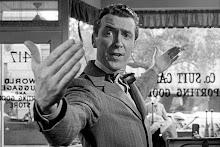
Tuesday, 25 February 2020

A House like Heaven: The Social Allegories of 'High and Low' and 'Parasite'


Just a few cool parallels you can make in the ensemble staging and composition
of shots between Akira Kurosawa's High and Low and Bong Joon Ho's Parasite 

WARNING: Spoilers for Parasite to follow. Minimal for High and Low because that's the film I want to recommend to anyone who hasn't seen it yet but if you kind of want to go in cold, then go ahead and skip this article. And if you want to keep thoughts about the two films separate, key individual thoughts on High and Low will be in blue, Parasite will be in red, while I'll also keep key thoughts on the films' common dominant themes in bold.

'Your house looked like heaven, high up there'. 
It's a line uttered by a character at the finale of High and Low but could easily come from the mouth of any members of the Kim family to any of the Park family in Parasite. Wealth in both films is epitomised through elevation upon a hill: the 'heavenly', wealthy environment presiding over the impoverished lower depths of the 'hell', epitomised by the impoverished tiny flat of the 'villain' of High and Low, and the semi-basement apartment in Parasite which the camera frequently encloses the characters within a tight space with little breathing room - literal and figurative immobility, while the elaborate world of the mansion and the bunker underneath the Park mansion which literally manifests into a living hell shows the tenuous, fragile co-existence of these two worlds. Sometimes so close yet so apart. A simple enough starting point as a theme, commonly explored through social inequality and class conflict dramas. The approaches that Kurosawa and Bong are very different, though - the former puts you within the wealthy environment as the initial perspective and then branches 'downwards' as the world collides. While the latter introduces you to the impoverished family 'below' and with them ascends gradually upwards.
In line with this, the wealthy patriarchal figure in both films are very different. Both Toshiro Mifune's King Gondo and Lee Sun Kyun's Mr Park are both presented as composed, calmly dignified figures. Perspective comes into play beautifully with just how differently they are presented though: Gondo is essentially our protagonist for the first half of the film, and yet there is also a certain distance we are granted to him. It is not coldness or even calculation really, but the reserved determination of a businessman who puts his own set of ethics, business or otherwise, above all else - he is who he is and sticks to his beliefs and ethics. Whereas with Mr Park, who deals with everything from work to the possibility of his driver leaving his bodily deposits in the backseat of his car, it's all handled very to the point in a professional manner. We are given an outsider's perspective of essentially a polite 'front' by Mr Park in dealing with everything in the most professional of manners that he can switch on and off, while Gondo he expresses his anger at the kidnapper seeking to undermine him very clearly, announcing it very clearly to everyone in the room as just part of who he is.
In Parasite the poor consider the niceness of the Parks, with 'no resentments' and 'no creases' being on account of money being an 'iron' which smooths out these creases - 'they are nice because they are rich' and 'if I had all this I would be kinder' remarks the poor mother Chung-sook (Jang Hye-jin) muses as she looks around the wealthy Park mansion. Meanwhile in High and Low Gondo's distanced presence initially puts off the detectives on the case, but ultimately through his actions proves them wrong about their preconceptions. As one of the detectives remarks, 'that Gondo is all right. Usually, l waste no love on the rich. l didn't like him at first. Excuse me.' Both rich patriarchal figures are put to the test of just how 'nice' they are, not a simple litmus test by any means and far from conclusive about the overall messages of their respective films, but it is an interesting thing to note about both films. 
 The visual storytelling in both films is just superb as distance is always distinctly conveyed with Gondo and Mr Park. In the introduction between Mr Park and 'Driver' Kim in Parasite, a line in the dividing glass separates the two, and in the subsequent car scene their interactions are conveyed with edits, always separate even when the conversations are flowing with earnest appreciation for one another. Mr Park is friendly, warm, but there is always a divide in the car with the exception of a panning shot where Driver Kim asks Mr Park whether he loves his wife - the 'crossing' of the line that Mr Park intensely dislikes

In High and Low the distance betweenn Gondo and the people who work for him, whether it's his assistant or chauffeur or the police detectives, is conveyed through Mifune's acting where it is not a wall, or a line even, it is just how he deals with people. And as the high stakes of the film begin to transpire through the kidnapping plot the distance between characters grows tighter, leading to the shot of Gondo sitting quietly in contemplation as he considers his options, surrounded by subordinates. He is enclosed whereas Mr Park is divided. What to make of this? Honestly, it's all up to interpretation. It's a cool, fascinating and invigorating ensemble staging choice for both directors, and you can make of it what you want to make of it. 
Moving away from Mr Park and Gondo for awhile, there's just so many other fascinating parallels in the films which I, upon five re-watches of Parasite, have yet to even get to the bottom with. You could have a field day just by looking at how the figure of the 'rich kid' is presented in both films. Both love playing dress up, both seem to take after or look after their fathers more, both are a central yet almost passive element to things getting out of hand in both films. Gondo, however, notably lets his kid play with the chauffeur's son Shinichi - they are friends and while he doesn't treat the chauffeur and his son like 'family' so to speak in terms of interactions or anything, what he ultimately does, the decision he makes over the course of the film is essentially that of pretty much treating the chauffeur's son as his own son.

While Gondo's chauffeur's child plays with Shinichi, the Park family never enquire about Kims' family, and the son's playtime buddies are the first housekeeper Moon-gwang (Lee Jung-eu), the Kim daughter Ki-jung who tutors him in art (Park So Dam), and his papa. Oh and if getting scared into convulsions by the fella living in the basement underneath counts, I guess him too. They're all dead by the end of the film. Is there something to take away from that? I think so, what a little brat. In all seriousness though the rich son is a figure in Parasite who while almost peripheral is utterly essential to the proceedings, and there's so much that could be unpicked in that regard.
Phones are an essential driving force to both films. In High and Low it is the means with which the lower class kidnapper threatens the upper class Gondo through ransom demands. As the call proceeds, all people in Gondo's living room converge upon it as the lifeline they are all clinging onto. In Parasite the phone is essentially a weapon wielded to gain the upper hand as in effect one group of 'parasites' seeks to wipe the other group of parasites out, even if it means taking themselves down along with them. As expected, everything unfolds into chaos as all hands converge upon essentially a matter of life or death with regards to the lower class being able to stay within the upper stratosphere of the Park family home. The basement dwelling Geun-sae (Park Myung-hoon) compares it quite aptly to a North Korean missile launcher. One push and everything will implode an already tense and messy situation into oblivion, and even the temporary resolution of it only paves way to increase chaos. 

It is a dog eat dog world in both films, where the only way that the poor can maintain any sort of stability is by in effect stepping over the other, gaining control of the other. The kidnapper in High and Low makes use of a frenzied junkie in the slums to his own advantage by testing heroin on her, and in Parasite the Kims sacrifice one working class employee after another to their schemes, and Mr Kim is forced to restrain the first housekeeper and her husband in the bunker in order to maintain the Kim's increasingly fragile web of lies. Hell as it is was concocted and kept under wraps by the first housekeeper, maintaining the fragile balance within the household as she kept her husband within the bunker and providing him with regular food. Once she dies, like Odin in Thor Ragnarok it paves way for hell being unwrapped and unchained (going into hiding for a bit while Martin Scorsese puts a hit on me for putting a MCU film in discussion with Parasite) and hell implodes onto the surface, resulting in quite the disastrous birthday party for the rich son. 
Hell is quelled but at a cost to both parties in both films: in High and Low the kidnapper 'loses' but the money cannot be recovered in time to save Gondo's business pursuits. In Parasite both the rich and poor families lose family members close and dear to them, as the frenzied rage of the bunker-dwelling Geun-sae murders Ki-jung, the only 'poor' character who really 'fit' into the wealthy surroundings and is in turn murdered himself, reverting things back to the equilibrium in a tragic fashion; while the poor father murders the rich father in a blind rage as a buildup of his resentment toward Mr Park mocking his 'scent' of poverty behind his back, the tragedy ensuing for his family in front of him, and the rage at his lot in life that has been building on since the beginning.  It is the the rage and resentment of the class divide that instigates and de-escalates over the course of both High and Low and Parasite, resulting in sombre reflections of the fallout for both. In both films the plans of the impoverished do not work out: the kidnapper 'loses' to Gondo in High and Low after being caught by the authorities, and it all amounted to nothing. One of his last lines concerns how his hatred of Gondo gave him a 'purpose in life' where it was 'interesting to make fortunate men unfortunate'. His plan was to ruin Gondo's life, but ultimately his failure and irony in making a 'hero' of King Gondo due to the positive publicity he gets in the process, is both a cathartic and tragic element of the film. His plan did not succeed, and his death is simply a footnote on the 'hell' he was born into. In Parasite the poor son Ki-woo (Choi Woo-shik) repeatedly talks of plans to which his poor father sombrely reflects that the only kind of plan that cannot fail is 'no plan at all'. 
Both films end on the tragic note of the class divide being the one constant as Gondo, the rich man tries to comprehend the tragedy of the poor man not for any personal gain, not for any sort of desire for vengeance, but sadness reflecting the immeasurable divide between the two through the wire mesh divide. 'If I had to go to heaven, I'd really tremble' bitterly remarks the kidnapper - there is no place for him there. And yet Gondo tries to understand and deeply sympathises.And as Parasite concludes the poor son lays out the plan, a 'fundamental plan' to earn money and but the house to rescue his father who is hiding in the bunker who has in effect replaced the previous parasite and descending into an even lower hell than he was in before. This 'fundamental plan' however is a futile hope that will never work out. A self-comforting wish fulfilment fantasy that will never be fulfilled. 'Take care until then' is a then that will never come, and the poor son is stuck where he was in the beginning, only with even less than he had before. 'I do think the film has a hopeful streak', screenwriter Han Jin Won says on Parasite, however, and I agree with him in the sense that while it is a bleak tale, it carries with it an optimism in terms of stories being heard. That's another discussion for another day I suppose.

Edit: in addition, - https://www.indiewire.com/2019/10/parasite-house-set-design-bong-joon-ho-1202185829/ Cool article I was linked to which goes further in this regard with regards to the set design and how it reflects the High/Low, Heaven/Hell dynamic!! 

Sunday, 23 February 2020

Top 10 Performances: Emily Blunt


10. The Young Victoria 
Though the overly vague and distant approach to the material by Jean-Marc Vallée limits her a bit, Blunt is certainly very well cast as Queen Victoria, bringing out the right sort of royal grace and assertiveness even when the writing tries to make her more meek than she should be. I really wouldn't recommend the film too much since it's a fairly bland affair but it's an early good leading role of hers. 

9. My Summer of Love 
The same goes for this intimate drama by Paweł Pawlikowski which again, nothing amazing (beautifully shot though) and is a decent watch, and Blunt is pretty good here as wealthy girl Tamsin who takes interest in working class Mona (Natalie Press). This is one of those films which doesn't distinguish itself much from the other sorts but is a notable early strong turn from Blunt in playing up the shallow vivaciousness of her character, and a sign of her talent prior to more high profile roles. 

8. A Quiet Place 

A very simple reactionary performance that's all about helping to amplify her husband John Krasinki's atmospheric direction and concept, and out of the cast she nails it (no pun intended) the best. It's all about delivering in the 'in the moment' tension and she does a great job at selling every tense sequence and reflecting the emotional exhaustion from dealing with fear in silence.

7. Into the Woods 
Blunt is particularly suited to musicals not just because she has a strong voice but also because she's very good at bringing a certain naturalism to musical numbers, where she really does do a good job of  'acting' through the music. I have to give her all the credit in the world also for making the weirdly written character of the Baker's Wife make sense and in the process making the ending of the film quite moving in its own way.

6. The Devil Wears Prada 
Her breakthrough turn for which she got acclaim and awards notices for (though unfortunately fell just short of an Oscar nom), Blunt is a true scene-stealer in the best way here as the highly stressed and constantly on the move assistant to Meryl Streep's Miranda Priestly. She's consistently the funniest and most engaging part of the film and makes every one-liner flourish regardless of the quality, and is just very endearing and in a way is the star of the film even though it's not really about her character.

5. Looper
Looking over Rian Johnson's filmography, one cannot deny that he is an ambitious chap who seeks to do things his way, and I respect him wholeheartedly for that. Blunt's part of that in his decision to halfway through Looper change the pacing and focus to the farm where Blunt's Sara and her son live. I actually really like the film's slowed down approach in this regard and Blunt is particularly good in giving such a lived in portrayal of her character's position in life, and making sense of her gradual revelations of something more beneath the surface.

4. The Adjustment Bureau
A great example of how charm and star power can make so much out of a fairly simple role. At the end of the day there's not much to Blunt and her co-star Matt Damon's roles as luminous ballet dancer and ambitious congressman, but the sheer chemistry and enthusiasm they bring to their roles makes this such a fun film to watch. They make the film's simplification of a more complex concept not as frustrating as it could be because of how much you root for them to make their romance work, and is an example of why Blunt should be even more of a star than she is.

3. Mary Poppins Returns 
There is no other Julie Andrews and the role of Mary Poppins is undoubtedly hers, but what Blunt does in this better than expected sequel (I for one was very cynical about it) is take on her own approach, which is a bit less overly warm and a bit more incisive which works very well for the very different story this film takes on. Blunt as before thrives within the musical elements of the film and to her credit does find a nice alternate take on Poppins' warmth that is a highlight in her career, and I respect her very much for delivering in a role which could've easily gone all wrong.

2. Sicario 

The film itself actually underwrites her character a bit, as there's not much meat to her Kate Mercer so to speak beyond being an FBI agent thrown out of her element into a shady task force in Mexico. That's no real obstacle to Blunt who acts as a brilliant anchor to the film's hellish atmosphere and she's utterly convincing every step of the way in reflecting the increasing tension of the horrible things she sees, the bureaucratic frustrations of dealing with the cartel, and even manages to make some of the lesser elements work. Her final scene with Benicio del Toro in particular is one of the best acted scenes of the past decade, and her presence was sorely missed in the very underwhelming sequel.

1. Edge of Tomorrow 
A performance that like the film has only grown with time. The whole idea behind her character of essentially a video game NPC who is aware of the constant loop she's being put in, is a great concept and Blunt and her co-star Tom Cruise as the video game avatar create a fascinating dynamic out of this. As she's essentially giving a live, die and repeat performance over and over again while showing the different ways her character reacts to scenarios and how Cruise's character changes, her character changes too 'refreshes' after every square one. It's the type of performance that doesn't get enough credit in general beyond just the fact that she's a terrific and surprisingly convincing action hero. Incidentally the film itself is quite underrated in its own way.

Saturday, 22 February 2020

40 Years On, 'The Elephant Man' is David Lynch's finest hour

John Hurt as the titular 'Elephant Man' John Merrick, with Anthony Hopkins as Dr Frederick Treves;
Director David Lynch conversing with Hurt
I've always remarked that Lynch is at heart an optimist - and you only have to watch scenes like Major Briggs having a heart to heart with Bobby in Twin Peaks, any scene with Laura Dern in Blue VelvetThe Straight Story all throughout, to know that besides the bizarre flairs we all see there's also an utter sincerity that helps ground each of his works. Weirdness and warmth is all one and part of the overall package that makes him one of a kind. Now I've always been a mark for each and every one of Lynch's works, with Twin Peaks being up there with my favourite television series of all-time, and Blue Velvet being one of the greatest films of all-time. His crowning achievement though, for me, has to be his sophomore effort where he took the ambition and potential he showed in Eraserhead and crafted what some might consider in retrospect to be a compromise of his style to a studio system, but what I consider a flourishing masterpiece that set the mark for the rest of his career and truly set him up as one of a kind.

Moulds of Christopher Tucker's immaculate prosthetic effects 
The first two things that are often remarked upon this film are the makeup used to transform the late great John Hurt into the titular 'Elephant Man' a.k.a. John Merrick, enduring his severe deformity in 19th Century London. Amidst Lynch's filmography this is hardly the most 'snubbed' of his films at the Oscars - it's the only one to receive multiple nominations and the only one to be recognised outside of Lynch's direction and performances (Richard Farnsworth in The Straight Story and Diane Ladd in Wild at Heart) - but it is notable that the film helped usher in the makeup effects category at the Academy Awards (just in time to award the brilliant Rick Baker for his work in An American Werewolf in London) Christopher Tucker's work here is superlative in helping transform Hurt into Merrick without a hint of artifice, you really feel like you're watching this very particular individual with the immensely complicated makeup process not just for Merrick's facial structure but his entire body.

Hurt and Anne Bancroft as Victorian-era actress Madge Kendal
Of course this would be all pointless without the talents of the man beneath the makeup. No one could play a victim quite like John Hurt, who really was the king of getting the cinematic raw end of the deal. Yet what Hurt does with Merrick is grant him a quiet strength of spirit that comes through the prosthetics. The only assets Hurt really has at hand to utilise are his eyes and voice and he makes use of both to such expressive effect, to convey the innate shyness and fear of a man shunned by society gradually opening up to the kindness of others, and showing that sincerity and warmth of personality does not make a character boring, but can make him even more compelling in his own unique way. Anthony Hopkins too is extraordinary in giving such a quiet, realistic arc to Dr Frederick Treves, it's underrated how much of a knack Sir Tony has for playing kindness and generosity when he's best known for Hannibal Lecter. And as with any Lynch film the ensemble is watertight - John Gielgud, Wendy Hiller, Freddie Jones, Michael Elphick, (a very young) Dexter Fletcher, all add some fine British character actor work to the proceedings, and the lone American (and one of the greatest actors of all-time) Anne Bancroft fits right in with what might be the film's most iconic scene as her Madge Kendal trades lines from Romeo and Juliet with Merrick. It is a film that steps on the fine line between sincerity and schmaltz and achieves the balancing act perfectly as it captures just the right sort of kinship between the kindred spirits through the beautiful Shakespearean scripture.

Freddie Francis' remarkable B&W cinematography 
Speaking of writing, the screenplay does something quite remarkable which is delivering a message of generosity and compassion so earnestly while also not shying away from the hypocrisy and horrible treatment prevalent in both sides of society. Decrying the nastiest parts of human nature while also focusing on the best qualities of humanity. It never takes the easy route for kindness, firstly showing all characters as human beings with their own stresses and faults and showing how Merrick's generosity and kindness of spirit helps bring out the best of their nature, whether its Gielguld's hospital governor warming up to Merrick, Hiller's seemingly cold matron calling out the hypocrisy of high class society gawking at Merrick as a circus attraction, and one of the best scenes being Merrick's fellow 'freakshow' performers offering him a helping hand. This is very much a Lynch film in showing its affinity for the odd and shunned while also displaying the horrifying underbelly of much of society in the scenes where Merrick is being mistreated by his nasty showman caretaker. It is an auteur's film through and through with Lynch's individualistic style coming into play in particular. through the surreal bookends to Adagio in Strings (music is a consistently excellent element of the film with use of pre-existing music and John Morris' haunting score) which are just the right blend of out-of-this-world and painfully tragic. Among the other thing to bring up at a technical level is Freddie Francis' strangely snubbed cinematography (particularly since he won the other two times he was nominated for Sons and Lovers and Glory and how beloved this film was in the other technical categories).

In conclusion: if you haven't seen this film yet, whether because you're a bit wary of the concept, a bit scared or tentative, or just haven't piqued up the interest, I assure you it's every bit as brilliant as I've enthusiastically praised here, if not even more so.

Tuesday, 11 February 2020

Reel and Roll Awards 2019: The Winners

(some changes have been made from my previous posts, will update accordingly) 

Best Picture 2019: Parasite
Runner-up: The Lighthouse 
3. 1917
4. Little Women
5. The Irishman 
6. Uncut Gems
7. Jojo Rabbit 
8. The Farewell
9. Avengers: Endgame
10. A Hidden Life

Best Director 2019: Bong Joon-ho, Parasite

Runner-up: Sam Mendes, 1917
3. Robert Eggers, The Lighthouse
4. The Safdie Brothers, Uncut Gems 
5. Greta Gerwig, Little Women 

Best Actor 2019: Willem Dafoe and Robert Pattinson, The Lighthouse
Runner-up: Adam Sandler, Uncut Gems 
3. George MacKay, 1917
4. Roman Griffin Davis, Jojo Rabbit 
5. Adam Driver, Marriage Story

Best Actress 2019: Saoirse Ronan, Little Women 
Runner-up: Valerie Pächner, A Hidden Life 
3. Scarlett Johansson, Marriage Story
4. Lupita Nyong'o, Us  
5. Jessie Buckley, Wild Rose

Best Supporting Actor 2019: Al Pacino, The Irishman 
Runner-up: Joe Pesci, The Irishman
3. Timothée Chalamet, Little Women
4. Song Kang-ho, Parasite
5. Sterling K. Brown, Waves

Best Supporting Actress 2019: Zhao Shuzhen, The Farewell
Runner-up: Florence Pugh, Little Women
3. Scarlett Johansson, Jojo Rabbit
4. Cho Yeo-jong, Parasite
5. Park So-dam, Parasite

Best Ensemble 2019: Parasite 
Runner-up: Jojo Rabbit
3. Little Women 
4. The Farewell 
5. The Irishman

Best Original Screenplay 2019: Parasite 
Runner-up: The Lighthouse 
3. Uncut Gems 
4. Marriage Story
5. Portrait of a Lady on Fire

Best Adapted Screenplay 2019: Little Women
Runner-up: The Irishman
3. The Farewell
4. Jojo Rabbit
5. El Camino

Best Cinematography 2019: 1917
Runner-up: The Lighthouse
3. Portrait of a Lady on Fire
4. Parasite
5. A Hidden Life 


Best Editing 2019: Parasite
Runner-up: Uncut Gems 
3. The Irishman
4. The Lighthouse 
5. Little Women 


Best Costume Design 2019: Jojo Rabbit 
Runner-up: Little Women 
3. Once Upon a Time in Hollywood 
4. The Aeronauts
5. Vita and Virginia 

Best Production Design 2019: Parasite 
Runner-up: 1917
3. The Lighthouse
4. Little Women
5. Once Upon a Time in Hollywood  


Best Sound Editing 2019: The Lighthouse
Runner-up: 1917
3. Apollo 11
4. Ford v Ferrari 
5. Midsommar 

Best Sound Mixing 2019: 1917
Runner-up: The Lighthouse 
3. Parasite 
4. Uncut Gems 
5. Ad Astra 


Best Visual Effects 2019: 1917
Runner-up: The Lighthouse 
3. The Irishman 
4. The Aeronauts 
5. Godzilla: King of the Monsters

Best Makeup and Hairstyling 2019: The Lighthouse
Runner-up: Bombshell
3. The Irishman 
4. Midsommar 
5. Monos 

Best Original Score 2019: 1917
Runner-up: A Hidden Life
3. Parasite 
4. Avengers: Endgame 
5. Little Women 

Best Original Song 2019: 'Stand Up' - Harriet

Runner-up: 'Glasgow', Wild Rose
3. 'I'm Gonna Love Me Again', Rocketman 
4. 'Speechless', Aladdin 
5. 'Beautiful Ghosts', Cats 

Thursday, 6 February 2020

Reel and Roll Awards: Best Director 2019

Top:  Josh and Benny Safdie, Uncut Gems
Bottom: Vince Gilligan, El Camino; Martin Scorsese,  The Irishman
There's nothing wrong with a director going back to a tried and tested formula that suits their strengths, and really in the most basic sense that's what these four gentlemen have done with their respective films. There's a reason I'm talking about the following here as each director not only finds something new to offer this time around, they completely re-evaluate and turn in an entirely vivid, new experience for their films I'd never experienced from them before. Vince Gilligan returning to the biggest hit television series of all-time in El Camino gives one the opportunity to hone in on what Jesse Pinkman's been up to since we last saw him making his escape in the Breaking Bad finale. Which was a perfect ending in itself, but what Gilligan does here is craft the perfect epilogue to it. He explores what got Jesse into this situation and what will get him out of it, and creates such an affecting, tense portrait that narrows in on a contemplative exploration of  Jesse, and the film works all the better for finding new ground to tread on instead of trying to recreate the Breaking Bad magic. The Safdie brothers Josh and Benny once again turning to a 'man on the ledge' genre to play with in Uncut Gems, presenting us with another dickhead to root for, this time around switching from Good Time's selfish, high-wire toxic Connie to the selfish, high-wire, toxic but altogether more wealthier Howard. We get a character who once again repeatedly puts himself in ridiculous situations, and through it the Safdies create, through all their technical excellences and conjuring up brilliant performances across the board, the unforgiving world of the New York diamond district where the character bounces off once fuckup after another repeatedly trying to find a way out, and making tension and anxiety over a frankly repulsive individual which is just remarkable. Martin Scorsese makes what might be his last go-around on the mobster genre ride in The Irishman. His decision to make a film about such a decidedly passive character and gradually hone in more and more on him as history unfolds across him is brilliant. Like Gilligan and the Safdies he presents us with a figure going through all sorts of situations that he's played around it before, and like them he presents his protagonist, Frank Sheeran, in an altogether different light, a nostalgic light that's gradually torn away as history catches up to him and he simply can't keep up with it. It's marvellous work from all three directors in conjuring up such compelling narratives, all essentially driven by presenting such a vivid, unforgettable wide scope and then fixating upon such compelling individuals. 

Left:  Terrence Malick, A Hidden. Life
Right:  Céline Sciamma, Portrait of a Lady on Fire; Lulu Wang, The Farewell
Terrence Malick has spent the past few years directing glorified perfume adverts, so it's nice to see A Hidden Life as a return to form for him. It's by no means a perfect film, overlong and in need of a more concise edit, but what's there is often very strong and occasionally rather brilliant. Malick once again returns to what really is his greatest strength which is in capturing emotional intimacy in unlikely situations, and the film really excels the most when he allows us to really reflect on and absorb the power of the central relationship. Whether it's showing snippets of an early courtship, letting the camera linger on a husband's joyous return and his heartrending departure, and while there are scenes which come across as pointless navel gazing, particularly in the second half, there are just as many astonishing ones which capture the power of the true story. Meanwhile, Lulu Wang's direction for The Farewell is more understated yet no less powerful in its poignancy. She really does well to sidestep any pitfalls of the indie genre by balancing naturalism with the laughs and drama, and coheres them into a loving, yet observant and  take on the family dramedy genre. What I particularly love is that she lets the performances flourish so much without trying to divert attention away from them, which is generally a problem I have with a lot of films, when she does undertake more overt stylistic choices it works, for example the 'funeral' scene or the family wedding montage, but my favourite moments are subtle touches like how she silently uses the camera to tell us the inner emotions of characters. And Céline Sciamma for Portrait of a Lady on Fire crafts an unforgettable immersive experience within a striking romance. Sciamma of course makes use of glorious cinematography and a strong screenplay to fashion such a compelling yet simple narrative, yet what I really have to commend is her restraint. Yes, there are amazing sequences like the titular 'on fire' scene which is just an astonishing piece of stylistic direction, but I really liked too how she allowed other scenes to play out with relative normalcy and calm, and never battering you over the head with the 'passion' between the two character but rather letting it be drawn out and slowly build up. And I keep mentioning it but that ending really is one of the most brilliant pieces of direction of the year. 
Alejandro Landes, Monos
Robert Eggers, The Lighthouse; Sam Mendes, 1917
Then you have directorial efforts which really go for the grand, epic, daring scope of capturing very specific atmospheres. In this regard, Alejandro Landes' work on Monos does a terrific job of capturing a consistently unnerving tone. You get pulled into this claustrophobic, hellish little world of child soldiers and the film never really lets go over its duration, and I really dug how Landes keeps these figures at a certain distance from the rest of the world, the isolation which creates even more sense of this often surreal environment. The film is very loosely plotted and the actors while uniformly strong are all very much within the director's vision which is the domineering aspect of the film. Landes runs with this disorientating mad experience and whether or not you like it, you got to admire it. Robert Eggers' The Lighthouse is also madness of an altogether different sort. It's honestly the kind of direction that gets the better the more I think about it, as Eggers does with the likes of Fritz Lang, Bergman, black and white horror cinema on the whole, what someone like Todd Phillips failed to do with Scorsese in Joker. In that the influence on his work is keenly felt, yet it is very much his own imprint on the genre rather than a blind copycat's pastiche. Everything about his direction from the aspect ratio, to the choice of lighting, however he got such brilliant performances out of his actors by often crazy means, every odd choice he makes is astonishing in how well it works. It's a true masterclass in Gothic filmmaking. Meanwhile, Sam Mendes takes a stab at the war genre with an approach like no other with 1917. Honestly, I'm not usually a Mendes fanboy, but this time round he really astonished me in crafting a war epic like no other. It's a virtuoso bit of filmmaking in combining everything - acting, score, CINEMATOGRAPHY, sound, vfx, screenplay - into such a tautly made immersion into the war zone. I love that Mendes is never singular in his intentions, there's variation with quieter moments, that make the primary purpose of a grand war action epic resonate beautifully without ever losing sight of the very personal story at its core. It's invigorating work that's frankly grown even more in my esteem with every re-watch.

Bong Joon Ho, Parasite
Greta Gerwig, Little Women; Taika Waititi, Jojo Rabbit. 
Then we have the tricky balancing acts of the tones of these three films by three terrific auteurs. Taika Waititi strikes for the skies with Jojo Rabbit and in my opinion does a great job with it. Waititi's style as a director is particularly attuned to taking on a child's perspective, which he does so with such aplomb here once more. It is a different beast to Wilderpeople or Boy in terms of the subject matter he is dealing with here, and his choice to essentially maintain optimism and idealism in the face of the horrors in the margins is certainly a point of contention, but an approach that entirely worked for me in creating a humorous but also affecting coming-of-age tale with some standout moments like the shoes scenes which are unquestionably brilliant, and moreover his energy and life he brings to every scene is just superb too. Meanwhile, Greta Gerwig was horribly snubbed at the Oscars for her sterling work in Little Women. Her work here is for lack of a better word, wondrously wonderful. Taking her own unique spin of Gerwig-ness to material that doesn't immediately scream 'another adaptation' and making it her own. I have to commend Gerwig so much for really nailing what made Alcott's novel so great was how it is at once one of the most joyous and heartbreaking of stories,  and Gerwig's choice to play with the structure and add in little touches of modernity without straying too far, retaining the essence of what made the novel great and adds in so much of her own style, and juggling the tones with som. particularly daring choices in that regard, creates such a fascinating take on the tale of four sisters. Then of course there's Bong Joon Ho and Parasite. What more can be said about the best directed film of the year, by far? First and foremost it's just an incredibly entertaining film. Just the way everything is presented, particularly those stunning montages, the individual musical choices, the brilliant ensemble staging that he's always been known to excel in. It is a film that is as funny as it is dramatically compelling, as thrilling as it is contemplative, and Bong knows when to hold back on one tone to emphasise the other and when to combine them. What goes beyond it just being a hugely entertaining film is how layered it is. It's no exaggeration to say that every frame of the film could be examined for finer details as to how Bong just adds so much more to reappraise in the story, making subsequent re-watches just as, if not even more, compelling.

Reel and Roll Awards Best Director 2019 

  1. Bong Joon-ho, Parasite 
  2. Sam Mendes, 1917
  3. Robert Eggers, The Lighthouse
  4. The Safdie Brothers, Uncut Gems 
  5. Greta Gerwig, Little Women 
  6. Martin Scorsese, The Irishman 
  7. Céline Sciamma, Portrait of a Lady on Fire 
  8. Taika Waititi, Jojo Rabbit 
  9. Alejandro Landes, Monos
  10. Lulu Wang, The Farewell
  11. Terrence Malick, A Hidden Life
  12. Vince Gilligan, El Camino 
  13. Rian Johnson, Knives Out
  14. Todd Douglas Miller, Apollo 11
  15. James Mangold, Ford v Ferrari 
  16. Quentin Tarantino, Once Upon a Time in Hollywood 
  17. Joe and Anthony Russo, Avengers: Endgame
  18. Jordan Peele, Us 
  19. Jan Komasa, Corpus Christi 
  20. Noah Baumbach, Marriage Story 
  21. Kleber Mendonça Filho and Juliano Dornelles, Bacurau 
  22. Marielle Heller, A Beautiful Day in the Neighbourhood 
  23. Dexter Fletcher, Rocketman 
  24. Tom Harper, The Aeronauts 
  25. Alma Har'el, Honey Boy 
  26. Craig Brewer, Dolemite Is My Name
  27. Joe Talbot, The Last Black Man in San Francisco 
  28. Jennifer Kent, The Nightingale 
  29. Julius Onah, Luce 
  30. Tom Harper, Wild Rose 
  31. Pedro Almodóvar, Pain and Glory
  32. Lorene Scafaria, Hustlers 
  33. Mati Diop, Atlantics 
  34. Tyler Nilson and Michael Schwartz, The Peanut Butter Falcon
  35. Garret Price, Love, Antosha 
  36. Matt Bettinelli-Olpin and Tyler Gillett, Ready or Not 
  37. Edward Norton, Motherless Brooklyn 
  38. Josh Cooley, Toy Story 4
  39. Sergio Pablos, Klaus 
  40. Joanna Hogg, The Souvenir 
  41. Gene Stupnitsky, Good Boys 
  42. Laure de Clermont-Tonerre, The Mustang 
  43. Harry Wootliff, Only You 
  44. Stephen Merchant, Fighting With My Family
  45. Olivia Wilde, Booksmart 
  46. David F. Sandberg, Shazam! 
  47. Dean DeBlois, How to Train Your Dragon: The Hidden World 
  48. David Leitch, Hobbs & Shaw 
  49. Anna Boden and Ryan Fleck, Captain Marvel 
  50. Clint Eastwood, Richard Jewell 
  51. David Michôd, The King
  52. Nahnatchka Khan, Always Be My Maybe   
  53. Jim Jarmusch, The Dead Don't Die 
  54. Kasi Lemmons, Harriet 
  55. Fernando Meirelles, The Two Popes 
  56. Ari Aster, Midsommar
  57. Michael Dougherty,  Godzilla: King of the Monsters
  58. Destin Daniel Cretton, Just Mercy 
  59. Trey Edward Shults, Waves 
  60. Chad Stahelski, John Wick: Chapter 3 
  61. Chanya Button, Vita and Virginia 
  62. Abe Forsythe, Little Monsters 
  63. James Gray, Ad Astra
  64. Kantemir Balagov, Beanpole 
  65. Grant Sputore, I Am Mother
  66. J.C. Chandor, Triple Frontier 
  67. Guy Ritchie, Aladdin 
  68. Danny Boyle, Yesterday 
  69. Christopher Landon, Happy Death Day 2U
  70. Rob Letterman, Detective Pikachu 
  71. Jake Scott, American Woman
  72. Melina Matsoukas, Queen & Slim
  73. Anthony Maras, Hotel Mumbai
  74. Jay Roach, Bombshell
  75. Scott Z. Burns, The Report 
  76. Jon Watts, Spider-Man: Far From Home 
  77. Brian Kirk, 21 Bridges 
  78. Jon Favreau, The Lion King
  79. Dan Gilroy, Velvet Buzzsaw 
  80. Tim Burton, Dumbo 
  81. Rupert Goold, Judy
  82. Steven Knight, Serenity 
  83. Joe Berlinger, Extremely Wicked, Shockingly Evil and Vile 
  84. Tate Taylor, Ma 
  85. Todd Phillips, Joker 
  86. Andy Muschietti, It Chapter Two
  87. Robert Rodriguez, Alita: Battle Angel 
  88. Luc Besson, Anna 
  89. J.J. Abrahams, Rise of the Skywalker 
  90. Simon Kinberg, Dark Phoenix 
  91. Karzan Kader, Trading Paint 
  92. Fred Durst, The Fanatic
  93. Tom Hopper, Cats
  94. M. Night Shaymalan, Glass  

Tuesday, 4 February 2020

Reel and Roll Awards: Best Screenplay 2019

Not the strongest year for Best Adapted Screenplay which was in all honesty quite top heavy, and personally I think the Academy did a pretty good job with four of the nominees being in my top 10, with The Two Popes being quite an enjoyable example of essentially a pope buddy dramedy that works rather well. Only the ludicrous nomination for Joker sticks out like a sore thumb. Well instead of that they probably could've nominate Hustlers for its entertaining enough pseudo-Wolf of Wall Street exploration of strippers partaking in a life of crime,  Richard Jewell's solid enough straightforward biopic that works best when honing in on the title character and his predicament where it has some genuinely great moments, the efficient and affecting finale to the current phase of MCU with. Avengers: Endgame with the second act being a particular highlight in terms of the story construction, and A Beautiful Day in the Neighbourhood which while slight does offer an affecting and often rather interesting use of Mr Rogers as essentially a guardian angel to our jaded protagonist.

5. El Camino 

It doesn't come close to hitting the heights of Breaking Bad in terms of its writing, but that's okay because that frankly would be an impossible task. What it does do is provide a natural continuation of the tale of Jesse Pinkman, and makes such good use of the pre-existing universe, particularly in the brief reprises of characters and how they all influenced and contributed to Jesse's life that all feel like properly organic inserts, particularly in his interactions with Todd and Ed. The plotting itself is very simple and straightforward but that's not the point really, where the strengths of the screenplay lies is in how it plays Jesse off every situation and gives you even more insight into the character as you root for him to come out of it okay. 

4. Jojo Rabbit

Waititi's style will always be a divisive one, particularly with the tricky subject matter he deals with here, and that extends to his writing where he brings a real daring and balance to his approach in adapting the story of a young Nazi fanatic by focusing largely on the absurd nature of the idiocy of such fanaticism. It's often very funny in this regard particularly in its more direct mockery of Hitler, the colour given to many of the side characters especially the adorably sidekick friend and the wacky Captain. What stands out even more though is the dramatic side of things where I think is where the film truly excels most, in particular when it comes down to showing how Jojo's relationship with his mother and the girl in the attic, in effect, comes into play in his transformation, which contrasts well with the more overt approach taken to the comedic scenes, and creates quite the affecting blend.

3. The Farewell

I've put it in this category despite it being campaigned in Original screenplay at the Oscars since Lulu Wang based it on a radio story she wrote for This American Life. This is a downright brilliant screenplay that does many things with an approach that is first and foremost very interesting and compelling in its exploration of the central character of the grandmother - who is beautifully crafted to be not just some narrow loving caricature but feels like such an organic, wonderfully written real character - and her family converging upon her, the cultural divide between the Asian American Billi and her Mainland Chinese relatives, and the 'lie' that takes an emotional toll on them all. It's often quite a hilarious screenplay, in the most unassuming of ways which avoids the usual indie tropes, but what's most impressive is the emotional undercurrent that it sneaks up on you which makes the scenes where it hits you on that front, hit all the harder. 

2. The Irishman

Well firstly as expected Steven Zallian crafts a great screenplay, and this is another Scorsese film with endless quotable lines. Whether it's the hilarious 'I do' 'who?' exchange between Keitel and De Niro, the 'you're late sequence', the constant reiteration of 'it is what it is', etc. are all extremely entertaining quotable scenes which rank among the likes of Goodfellas and Wolf of Wall Street. This is all tied together by the overarching tapestry of Frank Sheeran's personal history contrasted against the vast history surrounding him of the union boss Hoffa and the gangster life of the Buffalinos. It creates a continuously moving narrative filled with such colour despite its (deliberately so) colourless protagonist, before veering off into the brilliant direction of the epilogue which creates this lingering nostalgia for the past, but in a deliberately unnerving and even heartbreaking way. It's a great screenplay that creates its sense of place and time and characters, but above all connects them all to the overarching idea of a life led following others. 

1. Little Women 

Where Lady Bird was a more traditional retelling of the young adult coming-of-age story, in a good way, Little Women is a more ambitious, daring and altogether excellent switcheroo of Louise Mary Alcott's classic novel as she take s a great source material and makes it her own, while capturing all the required essence of the original. Everything you love about the novel is right there in the screenplay but through the back-and-forth structure makes the highlights hit all the more different and in just as captivating an emotional fashion as in the novel, whether it's comparing and contrasting life with and sans Beth, getting all the more insight into the characters of Laurie and Amy, the clever touch of meta commentary via Jo's submission of manuscripts that brings a whole new depth and layer, and the genius inclusion of Alcott's own letters into Jo's dialogue that's simply put, marvellous. 


  1. Little Women 
  2. The Irishman 
  3. The Farewell 
  4. Jojo Rabbit 
  5. El Camino 
  6. A Beautiful Day in the Neighbourhood
  7. Avengers: Endgame
  8. Richard Jewell 
  9. Hustlers 
  10. The Two Popes
Best Original Screenplay is efinitely the stronger category here overall. With Waves while I do have overall reservations with the story structure, its heights in crafting two uniquely powerful arcs is undeniable even if they don't cohere perfectly. Honey Boy is at certain points a fairly remarkable endeavour of self-exploration by Shia LaBouef, again not a perfect screenplay but in its central father-son relationship it does create quite the compelling, often tragic and heartbreaking dynamic, while Luce offers compelling if at times a bit unwieldy social commentary to go along with a solid enough mystery narrative, and some fascinating characters particularly toverachieving student with the possible darker side and his teacher. Knives Out is just a very fun mystery screenplay and I've discussed that before alongside 1917 which though minimalist in its intentions does have a very strong screenplay, some rather hard hitting dialogue - Benedict Cumberbatch's few choice lines are particularly memorable - and its exploration of Schofield's arc is actually rather powerful, and rightfully minimalist approach.

5. Portrait of a Lady on Fire 

A fantastic screenplay that succeeds where films in this genre so often fail which is giving a strong enough backbone through the screenplay to support the visual presentation of passion. The brewing love between the two protagonists is sensitively crafted with precision, mostly through just very naturalistic interactions that capture the right sort of realism and when it takes detours into the stylistic and literary, it feels right for the characters we've gotten to know. While silence is often essential for films like this to work, what contrasts with it is equally important and the film captures the fine balance between the two, and one particularly brilliant touch comes towards the end in the form of a book which is simply an inspired touch.

4. Marriage Story 

Truly vivid, often funny and often heartbreaking, and most importantly even-handed look at divorce proceedings. It has heart yet is never romanticised, and delves into a the central Charlie and Nicole who do love one another, detailed beautifully in the opening letters that open and close the film, and there's just so many lovely little touches in there between the harsher moments to suggest their love for one another beneath the resentment and bitterness, that makes the final confrontation all the more hard hitting. Then there's the side stuff with the family which is a mixed bag but for the most part hits the marks, the lawyer stuff which is often very entertaining and adds nuance by showing how there is no right or wrong between the two sides, only just the painfulness of the drawn out affair, and I have to give so much credit to Baumbach's writing which in itself drew me to tears more than a few times.

3. Uncut Gems

Above all the screenplay is just such a brilliant character study which however never uses that to compromise the high-wire thrilling plot, and vice versa. It is such a fascinating exploration into the character of Howard Rather, and his toxic yet utterly absorbing addiction to gambling with money and his own life. It creates such a sense of history to each of his interaction with his wife, his in-laws, his kids and his mistress while creating the right sort of intrigue in his dealings with both the shadier sides of the mobster heavies and the glamour of the NBA star. Speaking of the latter it's amazing how the Safdies and Ronald Bronstein managed to fashion such a natural way to segue the NBA stuff into the narrative that's the icing on the cake to the third act, which somehow concludes on a note that is both upbeat and downbeat while being utterly satisfying.

2. The Lighthouse

Might be damned to the depths of hell for not giving it the win, and quite frankly I probably should consider it because this is a downright amazing screenplay which grants the film such a distinctiveness. In that the 19th-century Maine-based dialogue is a tough sell and a daring approach to take that entirely pays off, as such an elaborate and poetic means of crafting these interactions between the two wickies. The dialogue is thick, vibrant, often coarse and consistently brilliant particularly when characters come to barbs with one another. Robert Eggers presents us with beyond that a layered Promethean narrative that takes its influences from Gothic fiction but fashions it into its own beast. It creates this uncertainty and intrigue by placing you alongside Pattinson's character who also has secrets of his own, and makes for such a terrific nightmarish trip down insanity. I should also note that it is possibly the funniest film of the year with some of the dialogue which is remarkable in itself since the scenario doesn't immediately lend itself to humour.

1. Parasite 

Parasite's screenplay is a brilliant puzzle put together in a way that provides both hysterical and haunting sequences in equal measure though not in the way you'd expect, with such a strong vein of social commentary implemented so seamlessly into the narrative. In a way it almost becomes hard to describe what the film is about by just how tightly wound and covertly elaborate the narrative is as it unravels and unspools. You get two wonderfully detailed family dynamics, sketching its characters and how they interact and complement each other so well, as well as what they represent in terms of the 'social commentary' aspect of the film without bogging them down. The way that the characters integrate and find themselves shifting within the social dynamics of the film is so elaborately drawn, the twists and turns to seamlessly implemented, and particularly worth noting is how everything comes together in the end in a way that both makes sense and is genuinely powerful. One of the best screenplays of the decade, no doubt. 


  1. Parasite
  2. The Lighthouse 
  3. Uncut Gems 
  4. Marriage Story
  5. Portrait of a Lady on Fire
  6. 1917
  7. Knives Out 
  8. Corpus Christi 
  9. Honey Boy 
  10. Waves