Here's the thing with the infamous Batman and Robin; I consider it to be a terrible film, but it's a lot of fun to watch and revel in its stupidity. It is a misfire on many levels. George Clooney is a terribly uninspired Batman (though I actually don't mind his Bruce Wayne all that much), there's a reason studios have kind of shied away from Robin in recent years, corny one-liners are funny for all the wrong reasons, and there's a certain hint of smugness that even without taking the film seriously at all, I can't quite enjoy. In terms of the villains and their execution, Uma Thurman nearly killed off her career with a career low as Poison Ivy, a villain with a great deal of potential, and the way the iconic villain of Bane is downgraded into some interchangeable paper-thin mook with cartoonish looking 'muscles' is laughable. As for Mr Freeze, the biggest selling point of the film was seeing how in the world Arnold Schwarzenegger would take on the role. Well he's not entirely terrible in an objective sense. He has a few affecting seconds, and it is somewhat enjoyable to see him rattle off the likes of 'allow me to break the ice', and 'revenge is a dish best served cold'. Unfortunately it completely undermines the nature of the character as one of Batman's finest rogues.
Mr Freeze hasn't been attempted in live-action film since, and I can kind of see why. The prevalent impression of the character among the general public unfamiliar with the comic books or television series see him as a rather 'unrealistic' villain, thus he'd never have really have fitted into Christopher Nolan's excellent Gotham universe where villains like Scarecrow, the Joker, and Harvey Dent/Two-Face were all depicted in a manner contingent with their gritty, hyper-realistic dimension. There was no room for a sub-zero scientist, although I would say the utilization of Bane and the League of Shadows was an element that does muddle the gap between 'realism' and 'fantasy'.
Anyway, I digress. Is there a way to make a live-action Mr Freeze work? Well apparently the version of Victor Fries on television show Gotham is well-done enough, so I can't comment. But based purely on what I've seen, Mr Freeze if done right, is a brilliant character with so much emotional depth to mine from. My basis largely stems from the Batman: The Animated Series, where Mr Freeze was voiced by Michael Ansara.
Throughout the series, Ansara's terrific voice work, which made the character so eloquent and menacing, but also with an undercurrent of sadness, stood out, but none more so in two features: the greatest episode in the series, 'Heart of Ice', and the feature film Batman and Mr Freeze: SubZero. I'll start with the latter first actually. In this film, the arc of Victor Fries actually somewhat resembles that of Schwarzenegger's Fries, in that Freeze has his wife Nora cryogenically encased, looking for a cure and soon discovers it in the form of an organ transplant from a rare blood type donor, which he soon finds in Barbara Gordon/Batgirl. The way the film presents Fries is fantastic in that despite being the antagonist, he's never really a villain. The perspective we're given with the character makes you emphasize with his plight even when he's doing technically dastardly things, because there's never a hint of malevolence behind it. He shows no joy in performing 'bad' actions as a 'bad' guy, he merely has become so disenchanted with the world that he'll go to any means to piecing it back together again. The use of an Inuit boy Koonak is another inspired element to the film as Victor Fries' partner, as it gives the man an interface for showing some of the humanity underneath the icy exterior.
The work of Ansara and the animators in the film was great, but the crowning legacy of Mr Freeze must certainly go to 'Heart of Ice'. The episode's story is simple: Batman tracking down Freeze and finding out what's his story. It's a stylish and exceptionally well-made episode, but I do think its greatest strength lies in its emotional core. A particularly great scene is when Batman finds out the backstory to Freeze's creation and his ailing wife's death; the jarring turn from the horrified, grieving Freeze and the chilly, unmoved one who says to Batman, 'it would move me to tears, if I still had tears to shed'. The writing of Freeze's lines is brilliant as there's an incisiveness and coldness to it fitting for a Batman adversary, but beneath that deadpan and cool delivery such an overwhelming sadness. The final few lines of the episode are beautifully written and made even more heartbreaking by Ansara's delivery of them, and the closing image of his snow globe is marvellous.
So where does that leave us now? Well, in terms of actors who could potentially play Freeze, I'm not sure. Bryan Cranston could be fantastic, David Morse would fit the role well, and I could see someone like Corey Stoll, or Mark Rylance knocking it out of the ballpark as well. A toned down Sharlto Copely could work terrifically in the role as well, and a younger Sam Neill would have been pitch-perfect. In terms of his recent output, Keanu Reeves might make a surprisingly inspired choice; and my close runner-up to my top choice for Freeze would be Damian Lewis, who has a great voice
If I had to choose one particular actor though, Mark Strong would be my pick. He can play intimidating villains in his sleep, but what I love is that his performance in Tinker Tailor Soldier Spy showed how much emotional depth he could give an cold disposition, how much warmth he could convey beneath an icy veneer. I can't imagine the current DC universe doing the character justice however, so I guess I'll just leave it as wishful thinking for now.
On the flipside of my earlier article on 'good' performances by usually 'bad' actors, here's some performances that deserved a better film, but nevertheless stood out as particularly impressive bits of work in works that had little else to offer...I should note I haven't seen many of the 'worst' films of all-time, so many of these are simply 'not very good'; and that pretty much all of these are English language films, because the 'bad' films get more exposure in general than films from other countries, whereas films I've seen from Hong Kong, Japan, Italy, France etc. are all generally 'good' films.
Alan Rickman, Robin Hood: Prince of Thieves
The film isn't terrible, but it is terribly bland, best represented by Kevin Costner's thoroughly charmless turn as Robin Hood, a slew of pretty weak supporting performances, and a rather wayward script that can't seem to decide whether it wants to be a straightforward re-telling of the story of the Prince of Thieves, or whether it wants to delve further into its withcraft or romantic subplots. The costumes and set design aren't bad, but not particularly notable either. There is however, one reason to watch it, and that's for the late great Alan Rickman. Rickman's coming from another sort of film here, in the best possible way: he's hammy and over the top, but deliciously so, and makes the Sheriff of Nottingham one extremely enjoyable villain to watch. Is it on the level of Hans Gruber? Well, no, but this sure isn't Die Hard, and fans of him in the likes of Harry Potter would be delighted to find this different side to the deadpan master with his hilarious and menacing performance here.
Eva Green, Sin City: A Dame to Kill For and 300: Rise of an Empire
2014 was an interesting year for actors. There were great actors giving great performances in multiple great films (Tom Hardy for The Drop and Locke), good actors giving impressive performances in substandard films (Jack O'Connell for Unbroken and Starred Up), and then you had the one and only Eva Green being the very best thing in two pretty terrible sequels. Sin City 2 is probably the slightly better film, but still suffers from being a very uninspired, generally terribly acted and completely discordant piece of mundanely stylized cinema, but Green sinks her teeth into the role of the titular dame Ava Lord, making you wish she did the noir femme fatale in a better film because of how darn entertaining she is here. Then, in a bad sequel to a film I didn't much like in the first place, her performance as Queen Artemisia is a breath of dazzling elegance and cruelty, adding so much colour to a film otherwise steeped in genetic action scene after generic action scene. Green's far too amazing an actress to be stuck in these sorts of roles; give her some meaty dramatic characters, Hollywood, please.
James Woods, Killer: A Journal of Murder
Woods is perhaps the king of excelling in bad movies. In very lackluster films like The Onion Field, White House Down and the various bits of The Specialist I dozed in and out of while on television, he manages to make the most out of some very limited films and roles. He's extremely great when given the right material (see: Salvador, Videodrome), and even in a rather trashy film like the morally suspect Killer, he's marvelous. Woods completely devours every scene he has as an unrepentant murderer who wishes to die. The film is a missed opportunity overall but he soars and gives a rather mesmerinng performance as Carl Panzram, leading one to wonder, if in a better film, he'd have had a chance to get an Oscar nomination.
Deborah Kerr, The End of the Affair
Perhaps because it's an adaptation of my favourite novel of all-time, but this adaptation falls seriously short on so many grounds. It fails as a romantic film, but transcends in terms of acting, and not even throughout the cast, Van Johnson is very average as the love interest, but Deborah Kerr, whose performance I cover here (http://actorvsactor.blogspot.hk/2015/06/head-to-head-end-of-affair-deborah-kerr.html). Though Sarah Miles is greatly watered down from the deeply complex source material, Kerr gives an invested and rather terrific performance; another example of her making the most out of frankly underwhelming material include Love on the Dole, Seperate Tables (the film is good but the way her role is written isn't all that great), and Eye of the Devil. There's a reason she's my favourite actress of all-time; she can mine gold out of any role with her unique acting approach.
Morgan Freeman, Street Smart
The film is utterly terrible and I can't even defend Christopher Reeve's performance (most of his non-Superman work was okay, this was not), it was a pretty big flop too, the only thing I can really recommend here is Freeman's performance as pimp Fast Black, who finds himself implicated by Reeve's reporter in a convoluted case of false reporting. Freeman is both suave and chilling in portraying such a despicable fiend. There's not a moment to his dynamic performance where he doesn't carry some threat and his mellifluous voice is used to unique perfection as a tool for menace.
Helen Mirren, Excalibur
I tried to watch this once with a friend, we quit about 20 minutes in, appalled by its quality. I tried again and I must admit, was not entirely focused for the most part. It's actually a serviceable film on the whole, I put it here because it feels like it only engages the viewer in short spurts, and could've been so much more. One indicator of that potential is Dame Helen, playing Morgana le Fay. Her scenes with Merlin (Nicol Williamson) seem to come from another film altogether, and I thoroughly enjoyed watching the usually prim, proper and reserved Mirren play a pretty eeevil figure. In terms of more recent average films Mirren enlivens, check out Hitchcock, Woman in Gold are good places to start.
Raul Julia, Street Fighter
The film that started the trend of 'terrible video games adaptations', it unfortunately did not start off a trend of 'great actors giving great performances in terrible films'. Julia, in his final feature film role, really gave his all here, and if you know about the backstory to him making this film (he wanted to make a film his children would want to see because he was dying from stomach cancer), it's all the more remarkable. He was ill throughout the whole of this performance and most certainly could have phoned it in for the paincheck, but no, Julia decided to give it his all. It's performances like Julia's as M. Bison that completely denounce the notion that actively bad films cant breed actively good performances. He's kind of terrifying and oozes with power in a role that could've been a complete joke, and hilarious when need be in moments that could've fallen completely flat. A must-see if only for his performance. Amanda Seyfried, Lovelace
The film's main flaw is that its structure of paralleling two 'versions' of Linda Boreman/'Linda Lovelace', star of the controversial 1972 porn film Deep Throat, is not nearly as clever as it thinks. The film takes two extreme insights into the same sort of story beats and ends up feeling like more of a caricature than it should be, and is not at all helped by the performances of some of its cast like James Franco's terrible turn as Hugh Hefner. Dealing with such an inadequate film is Seyfried, an actress I generally find decent but nothing special. Well what Seyfried does here is quite special, in that she managed to make me feel deeply moved by her personal story and afflictions, and charmed by her charisma to show why she was such a big thing in the movie scene. She gave more dramatic weight than the film deserved, and for that I must consider this a performance well worth seeing, even if the film around it is seriously lacking.
Jennifer Jones, The Towering Inferno
One of the most generic disaster films ever made, this isn't 'Roland Emmerich at his worst' bad, but it's still pretty bad for a film that wastes a terribly great all-star cast in some rather bland disaster sequences. Jones as a posh fancy and all-round lovely guest Lisolette Mueller who's charmed by Fred Astaire's cheeky con, is one of the few real, humane characters in the film, giving a great deal of heart to a film that lacks any besides that. Her exit scene could've been heartbreaking, she certainly sets it up to be, unfortunately the way it's executed is horrible but that's no fault of hers. Ben Foster, The Program
A promising biopic of one of the biggest sports scandals in recent history, that of Lance Armstrong and his dope-tainted legacy, upended by a breakneck pace of the worst sort, ridiculously hammy 'villains' in a film striving for realism, and very workmanlike direction. The only thing worth seeing in the film, as tends to be the case for many films he's in, is Ben Foster. He manages to make you sympathize with Lance Armstrong, which is an incredible achievement in itself, without compromising the character's brutal, aggressive mean streak. He portrays him as not a caricature but a man in brief moments of humanity, and thus makes the segments where he displays the deceitful, lying nature and artifice of his 'heroic' status all the more effective. It's spellbinding work which the more I think about it, the more it deserves to rank higher up my 2015 Best Actor ranking.
Marion Cotillard, La Vie En Rose
I was going to talk about Cate Blanchett in Elizabeth but I will wait a bit longer for that. Anyway, the film isn't bad, just not particularly good, structurally a bit messy, and lacks the needed personal style a biopic like this needs from the director. That it works for me is because Cotillard's performance works for me. Her performance as Edith Piaf cannot be praised enough, and I'm so glad she won the Oscar back in 2007; throughly well-deserved. Adewale Akinnuoye-Agbaje, Pompeii
As I've mentioned before, I enjoyed watching Pompeii, but it is a terrible film, no denying that. Most of its 'bad' qualities I enjoy for just how 'bad' they are, for example how derivative it is from the likes of Gladiator, or Kiefer Sutherland's Razzie-worthy portrayal of a Roman Emperor (supposedly). There is one 'good' quality to it, however, which I thoroughly enjoyed, loved even: Akinnuoye-Agbaje's performance as champion gladiator Atticus, every bit as upstanding and grand as the Finch variety, whose every word uttered from an inane script feels like something out of the glorious epics of olden days. Akinnuoye-Agbaje, whose long long name is the only reason I feel he's not a bigger name, gives an expanded version of Woody Strode's role in Spartacus essentially, and makes the film around him better in the moments he's onscreen by giving a vivid portrayal first of a career warrior, then finally of a badass who looks death with no fear whatsoever. If only they'd made a film about him.
Woody Harrelson, Rampart
A difficult to watch film because of how unappealing it is in terms of aesthetic and the fact that it tries to do too many things, examine too many things at once. Not to worry though, it's worth watching for Harrelson's career best performance as a dirty cop with a conscience lurking deep underneath. I need to re-watch to reevaluate, but it is at the very least an interesting film because of his performance.
Bryce Dallas Howard, Lady in the Water
Paul Giamatti is quite good in it, too, by the way, but I want to talk about Howard more. The film is a passion project for M. Night Shyamalan, who by this point was rapidly fading in people's memories as the guy who made The Sixth Sense and Unbreakable, and would soon become he who directed After Earth, The Happening and Avatar: The Last Airbender among other masterpieces. It fails as a movie overall even though it has an interesting concept (an apartment complex bonds to help a water sprite who's washed up in their swimming pool return home), by failing to really establish a consistent plot thread, having some very indulgent moments of director's ego particularly in Shyamalan casting himself as a sort of 'writer saviour' character, and an unappealing aesthetic. None of the film's faults can be placed upon Howard, though. She's utterly convincing as someone not of this world, which is a harder task than it may seem, and with Giamatti creates a low-key chemistry that would've made a far better film than the overly amibitious failure it ended up becoming.
Hon. Mention: Mia Kirshner, The Black Dahlia
This is commonly acknowledged to be a 'bad' film, I personally like it a lot, and besides a dreadfully miscast Hilary Swank I can't find that much major to fault. The cinematography is beautiful, and the performance of Kirshner as the victim of the titular murder case, young actress Elizabeth Short, is spellbinding. Her actual screentime is very limited but her impact is huge, as through a few black-and-white reels of audition film and 'flashbacks' of sorts you get a full portrait of a deeply tortured soul. Hon. Mention: Denzel Washington, Flight
The film isn't 'bad', so to speak, but it is extremely problematic. The first 20 minutes or so are fantastic, but afterwards it becomes a sloppy mess, not an entirely bad sloppy mess mind you, but just a bit too overly melodramatic and overly comedic in parts, that results in quite the uncomfortable blend of tones for the film. I actually like the film, but each time I watch it I spot more problems. Now this isn't the worst film Washington's been in where he gave a good performance. Safe House is a rather bad film that comes to mind when thinking about that sort of Denzel Washington film. But in Flight the whole film's success comes down so much to Washington. He holds it upon his shoulders. He carries it through a script that continuously tries to undermine him. And boy does he kill that final confession scene of his, some of the best acting he's done in his career. The film may be underwhelming in parts but he never is.
He's one of my favourite directors, and the best director I've yet to give a Best Picture win to (though it remains to be seen for 2007 and maybe 1999), and always at the very least a guarantee of something completely unique and one-of-a-kind even when taking influences from other directors. Naturally, I love some of his films more than others, so here goes...(note: a lot of the clips are NSFW, as are most of Anderson's films.) 7. Hard Eight (4/5)
My least favourite PTA film, and it's testament to his incredible talent as a director that it's not a bad film at all, It's probably his least assured film as a writer, which is perfectly alright considering it was his first film, and though it contains many of the flairs we know and love about his style, it's slightly muted in my view by the nature of the story, which is rather low-key and if I'm to be honest, not exceptionally interesting. It tells the neo-noir tale of a listless young man John (John C. Reilly) and an aged gambler Sydney (Philip Baker Hall) who takes him under his wing, I enjoy the film, but it really doesn't go anywhere particularly fascinating after the rather great initial scenes of setting up the tone and atmosphere. The finale where Sydney 'resolves' matters and gives John his happy ending with a cocktail waitress (a solid Gwenyth Paltrow), and the not so happy ending to John's buddy Jimmy (Samuel L. Jackson, one wonders why he hasn't worked with Anderson again), are well done, but I don't know it just never impacted me in the way I felt it was trying to. Nevertheless, I cannot fault any of its technical aspects, especially considering the limited budget, and it makes for a good enough start to Anderson's career, though based on this alone I would not have been extremely eager to pursue more of his work. 6. The Master (4.5/5)
A film I am in sore need of a re-watch, as well as some of Freddie Quell's (Joaquin Phoenix in a performance that needs to be seen to be believed) paint thinner brew, for this one. It was the first Paul Thomas Anderson film I watched, and not necessarily in the best of circumstances. Anyway, the film tells the story of Freddie, a seriously troubled WWII veteran with all manner of addictions, who finds solace of sorts in the hands of Lancaster Dodd (Philip Seymour Hoffman), leader of a religious movement called 'The Cause'. Things are pretty wild before this, pretty wild after this, the film's a pretty crazy ride but not necessarily in the way you'd expect. I find it very interesting that the film is divisive as it is amongst critics, and how differently people try to 'analyse' the film, since I find the film absolutely impossible to analyse on the whole. It strikes me as the sort of film you more experience Paul Thomas Anderson's vision than try to 'decipher' it, so to speak; he throws you into this strange world of the cult, throws various dilemmas about the natures of cults, and more importantly the psyche of Freddie and how he influences others around him, and how others around him influence him.
The great thing about the film, even as someone watching a Paul Thomas Anderson film for the first time, is that he somehow makes it all feel so natural. He builds this somewhat surreal yet brutally realistic universe to perfection, and is enabled by a particularly intelligent script to sustain it through the whole running time - I'm not entirely sure about the ending myself, but I guess we'll wait for a re-watch. The best thing about this film though, is the acting. Amy Adams, as Dodd's wife, is biting and incisive, far removed from her usual 'cheery' style in an effective, disconcerting fashion. PSH, in his last role for PTA, is marvellous as the deeply charismatic and deeply complex cult leader, holding you under such sway throughout. And best of show is Joaquin Phoenix, who made a completely bonkers return to the Academy Awards scene with his extremely original, mad turn as a man you never can quite get the hang of, but remains surprisingly human and sympathetic (at least to me) throughout.
5. Punch-Drunk Love (4.5/5)
An Adam Sandler romantic comedy that actually doesn't suck! Actually, I take that overarching statement back. Not all Adam Sandler romantic comedies suck, not 50 First Dates, not The Wedding Singer, not Click. And certainly not one which utilizes the talents of Paul Thomas Anderson to mould Sandler's usual 'calm guy with sporadic bursts of extreme anger' into something not only funny, but also a fascinating psychological exploration of a man putting on an extremely awkward, slowly cracking facade against the world. Sandler's Barry Egan is a man who seems nice and sweet, if a bit awkward, and the truth is, he is a nice and sweet person, truly, and it's so interesting to contrast this exploration of a man with something like The Master or There Will Be Blood. Sandler is fantastic at playing up the awkwardness of the man alongside the anger issues that pervade him, and makes his subsequent toning down of both aspects through his relationship with Emily Watson's luminous Lena.
This is not your standard romantic comedy by any stretch of the imagination, however. If I had to cite a possible influence on Anderson, I'd say something like David Lynch's Wild at Heart, or the Coen Brothers' Raising Arizona come to mind, as Sandler plays a somewhat similar role as Nicolas Cage did in those films as an odd man faced with even odder circumstances in his pursuit of love. The opening scene is a beautifully shot, in medias res of oddity the Coens would be proud of, and I absolutely adore the third act which involves a VERY ANGRY Philip Seymour Hoffman shouting down a phone. A very wonderful, if small-scale film that while not a classic like some of his other films, remains a supreme joy to watch.
4. Inherent Vice (5/5)
A film that, while I love, I wouldn't necessarily recommend to everyone. If you thought The Master was odd in a not-so-good-way, stay away from this one. To call this film 'plot-less' would be unfair, though it does quite a lot to make you think of it in that way - it's basically a detective story about a private eye looking for a missing ex-girlfriend and her boyfriend while solving two other cases on the go, that are somewhat related, Raymond Chandler style. Except that this is no Raymond Chandler story, it's a Thomas Pynchon story, which means that the connections between the cases are at best tenuous throughout, characters are odd to the extreme and deliver exposition in the most bizarre manner, and the private eye himself, the one we are usually accustomed to being the Philip Marlowe-esque bedrock of sanity, is a stoner called Doc Sportello. The whole film is a mess in honour of the source material (apparently), and in terms of novel mysteries I find much more accessible, the taut plotting and characterizations of a Chandler to the scattershot nature of a Pynchon (I gave up on the novel Inherent Vice a few pages in).
Something tells me I should give the book another shot though, because I love the film. It's a fabulous mess. I don't think I'll put any of the individual scenes in here because out of context, they might not seem as effective as they really are in the sceheme of the film. Phoenix makes for an engaging and funny lead, reminding me a bit of a stoner Charlie Chaplin in his pratfalling antics, but the true gold to be mined here is the way Anderson stitches together this weird world of characters and situations. Josh Brolin's always angry police detective and adversary to Doc, Bigfoot Bjornsen, is my personal favourite of the lot, but the whole cast is completely on point, with particular mentions going to Martin Short's demented dentist Dr Rudy, Katherine Waterston's stylized femme fatale of sorts Shasta, heck, even Eric Roberts is great!! I cannot praise the cast enough, but Anderson's work is nothing to be sniffed at either. He perfectly mends the stylized tones of neo-noir and the 70's stoner vibe perfectly while still crafting an engaging story of sorts to follow through.
3. Boogie Nights (5/5)
I'd probably recommend this film to anyone who hasn't watched any Paul Thomas Anderson film, but wants to get into him. It's by far his most accessible film, which may seem a strange way to describe a film that gives insight into the 1970s and 1980s Los Angeles porn industry through the eyes of Eddie Adams (Mark Wahlberg), who soon becomes known as 'Dirk Diggler'. Boogie Nights is a film with a vast sprawling focus, but unlike Magnolia Diggler is always the ostensible lead, and Wahlberg gives an excellent performance as a man first fuelled by success and youth, and soon falling into drugs and depression, before soaring once again. The first film in which Anderson paid homage to Robert Altman with his huge ensemble and scope, Boogie Nights is a great and accessible film because its characters and their stories, are all so relatable despite their obviously unique profession. Julianne Moore's Amber Waves is sexy, sultry and seems like she has everything she wants from life through her job and fun lifestyle, but also faces the possibility of having a legal injunction against her ever seeing her child again; Don Cheadle's Buck Swope just wants to provide a good lifestyle for his newlywed wife and his soon-to-be-born child; Philip Seymour Hoffman's Scotty J. just wants love, and Burt Reynolds' Jack Horner just wants to make movies his own way.
There's a lot of different stories to cover through the film's runtime and Anderson does a fantastic job of it. The only story I guess I've a bit of an issue with is William H. Macy's Bill Thompson; the payoff to his storyline is a brilliant scene, but I'm not sure if the whole film builds up to it quite perfectly. Anyway, that's a nitpick, because Macy is really good in the role, and Anderson's direction of that tracking shot scene is fantastic. There's so many great scenes to pick out here from various perspectives. From a smaller acting standpoint, any scene where Julianne Moore's onscreen is brilliant; her performance, easily a career-best, is funny and heartbreaking, and she shares marvellous chemistry with Heather Graham and Wahlberg. The set design, whether it's Horner's house or the disco scenes, perfectly capture the very specific time period, the soundtrack is great, the cinematography is downright amazing, especially with those tracking shots which are a thing of beauty. Anderson shows the ability to switch from one hilarious scene to one tragic scene without missing a single step, and manages to sustain a perfect balance of style and substance to the overarching storyline, while adding so many lovely personal touches, whether it be the various outfits of 'Rollergirl', the cafe holdup scene, or that lovely and rather touching finale.
2. There Will Be Blood (5/5)
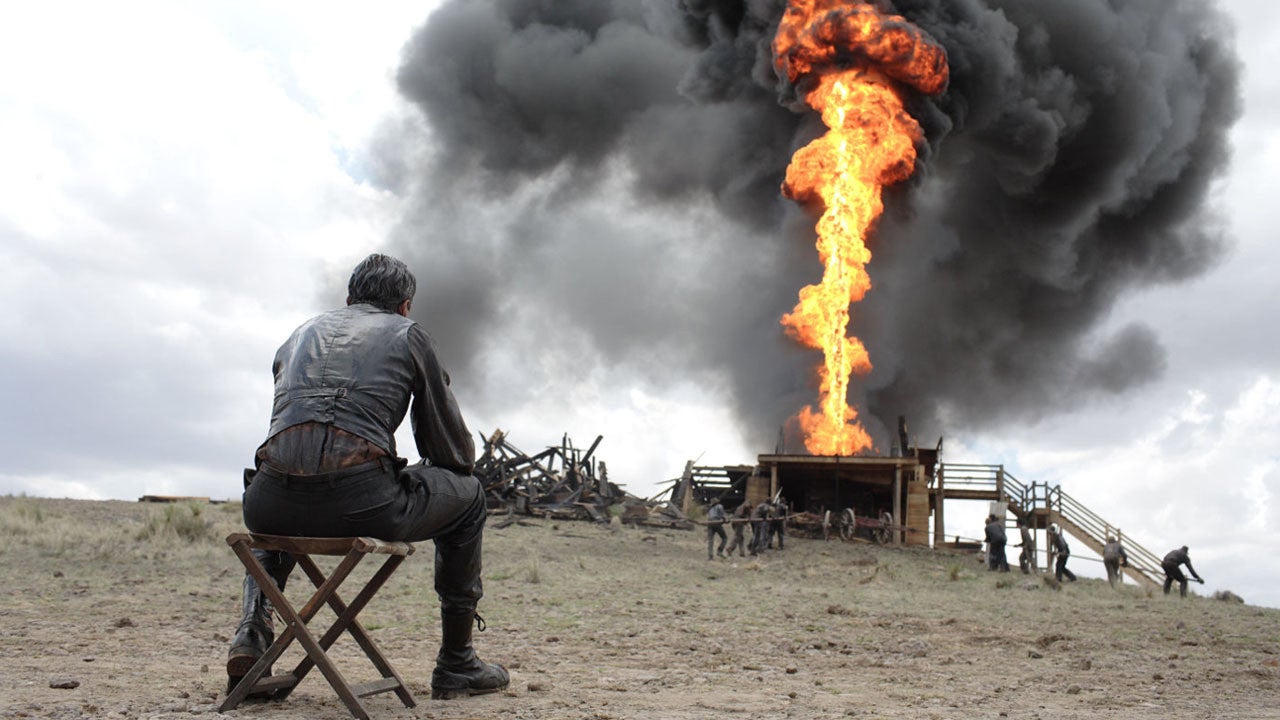
In contrast to the films before and after this one on this list, There Will Be Blood has a relatively tighter focus in terms of character, though certainly no less tighter a focus in scope. By tighter focus on character, I mean the film hinges entirely upon Daniel Day-Lewis' performance as Daniel Plainview, an 'oil man' through and through, because I'm going to talk about it more in the near future I'll have to sort of avoid talking about it now.
Anyway, without going into Day-Lewis' performance, there's still a great deal to talk about in this film. The cinematography is a great place to start off with, as it's some of the greatest cinematography of all-time, and no hyperbole is intended with that statement. Each scene feels like something out of an old John Huston film in the 1940s, but coloured, and every oil explosion, every landscape scene of oil mining, every scene in the Plainview household, feels so vivid and real and beautifully realized. It's a compellingly visual, viscreal experience to be beheld, that's only further supplanted by the excellent sound effects that truly make you feel within every experience out on the oilfields, and a downright brilliant soundtrack that incorporates Brahms' 'Violin Concerto in D Major' in the most unique tonal fashions (once after the derrick opening ceremony, once during the ending).
From a story perspective, the film actually does what lots of films are advised against, which is to tell of the story of a man's life as a story of a man's life, rather than pinpointing an exact event/moment in time of a man's life as the main story. Well this is part of the film's brilliance. We follow the complete arc of self-made oil man Daniel Plainview and never once does it feel rushed. The lead performance of course spectacularly does the job of selling Plainview's character transition in his ruthless quest for wealth and money, and it certainly dominates the film to an extreme extent. Which thus makes the performance of Paul Dano as preacher and adversary to Plainview, Eli Sunday, even more impressive, as he not only manages to hold his own against Day-Lewis, I'd argue that he in fact steals one or two moments away from him.
Anderson meshes all the aforementioned elements into a masterpiece of a film. It's an epic through and through, as the film's fantastic visual style, stylized and beautifully written script, and amazing ending make very clear. One might nitpick the lack of subtletly, though I'd argue there's a great deal of that in some of the quieter moments between Daniel and his son H.W., and some little touches in quieter scenes likes Daniel Plainview's confrontation with the elusive Mr Bandy. These small touches make the film work perfectly in line with the grander, bigger picture There Will Be Blood. I also think it's no spoiler to put the ending here since it's already so well known (it's a terrific ending and here's the Brahms I was talking about):
1. Magnolia (5/5)
As much as I love There Will Be Blood, and as frequently as I consider maybe making it my #1 PTA film, every time I re-watch or think about Magnolia I know I make the right choice in putting this at the very top. This is a truly ensemble film, the loosest ensemble film of his as there's no lead like in Boogie Nights or Inherent Vice, and each story seems to carry equal importance. The opening scene does an extremely effective job of setting up the tone of the film by telling of three stories of chance, as well as introducing us to the main players of Magnolia in a very straightforward, clear, somewhat expositionary fashion, and yet feels utterly natural and inspired. Too often I go into ensemble films and exit them without any idea of who I was watching onscreen besides big names actors placed to help the audience remember their names; there's certainly an abundance of them here (Tom Cruise, John C. Reilly, William H. Macy, Philip Seymour Hoffman, Julianne Moore to name but a few), but even if they weren't big names, the clear-cut and very entertaining way they're introduced with such a meta vibe helps imprint them in our minds.
NSFW
The film builds up all the characters and stories into a somewhat supernatural conclusion that some might hate, but I personally love. Anyway, as for what leads to the end, what else can I say besides the fact that I love it. It's difficult to try to describe each storyline, as many parallel and overlap with one another, but if I had to single them out:
Police officer Jim Kurring's (John C. Reilly) tentative romance with junkie Claudia Wilson Gator (Melora Walters)
Claudia's father Jim Gator (Philip Baker Hall), a television host on What Do Kids Know? is dying from cancer and wishes to reconnect with his estranged family, Claudia and her mother Rose (Melinda Dillon).
A former producer on the show, Earl Partridge (Jason Robards) who is also dying from cancer, and who wants to reconnect with his son through his night nurse Phil Parma (Philip Seymour Hoffman).
His son, Frank T.J. Mackey (Tom Cruise) is a pick-up artist and 'motivational' speaker confronting his demons firstly through an incisive reporter (April Grace) and through Earl.
Earl's second, much younger wife Linda (Julianne Moore) who married him for money, but now wants none of it because she's truly fallen in love with him.
Former What Do Kids Know? contestant Donnie Smith (William H. Macy) is in love with a bartender named Brad and wants to get braces to somehow impress him.
Current What Do Kids Know? contestant Stanley Spector (Jeremy Blackman) is being constantly pressured by his father (Michael Bowen) to win.
A body in a closet.
Whew. A lot to get through, yet somehow Anderson goes all-or-nothing and entirely succeeds in this regard. Each story is spliced and intertwined with each other in such a remarkably smooth fashion, and you never lose track of each character's story even when they're technically used to enhance another character's arc. The stories and characters feel so human even when uttering some very stylized and sophisticated dialogue because of Anderson's approach which is to make everyday life something worthy of artistic depiction. Below I've included some of my favourite scenes in the film in that regard, making real life situations and confrontations something truly exceptional:
These wonderful little scenes help to support the bigger bombastic ones which are equally great:
These are just a few of the amazing scenes in the film. There's one which brings all the stories together and the characters all sing to 'Wise Up':
I'm not going to add much from the third act because that's where so much of the power of the film comes into play. I'll just say this: Tom Cruise has a breathtaking scene near the end where even the biggest Tom Cruise hater will become a Tom Cruise fan. He gives one of the greatest performances in the cast, though Philip Seymour Hoffman is also great in one of my favourite roles of his as just a simply nice guy. Everyone is stellar; I haven't even gotten to the likes of Julianne Moore, who gets a hugely OTT role and manages to make it work completely:
Or Philip Baker Hall, whose storyline and breakdown scenes present such a fascinating contrast in how understated and yet even darker they are, and are directed with such remarkable restraint by Anderson:
I'll not spoil too much about how it all wraps up, but it really is one of the film's soaring points. It's all technically down to chance, and yet chance builds the film's finale into a perfect blend of tones. Nothing is closed-and-shut happy or sad, hopeful or dark, it's all down to how you engage with the film, and the beauty of it is you engage with the film in different ways depending on which storyline you feel most strongly about. For me it's a close call among them all. Julianne Moore's, Jeremy Blackman;s and Philip Baker Hall's storylines are consistently engaging, William H. Macy's is great, Cruise and Robards' are fantastic, but my favourite has to be the relationship between Claudia and Jim. John C. Reilly is quirky, messed up, heartbreaking, funny and ends the film on a magical note, one of my favourite film endings ever.
For the timebeing, since I haven't seen nearly enough, I'll just do my winners for some of these... 1930
Best Picture: All Quiet on the Western Front
Best Director: Lewis Milestone, All Quiet on the Western Front
Best Actor: Lew Ayres, All Quiet on the Western Front
Best Actress:
Best Supporting Actor: Louis Wolheim, All Quiet on the Western Front
Best Supporting Actress:
1931
M
City Lights
Public Enemy
Frankenstein
Skippy
Best Director: Fritz Lang, M
Best Actor:
Peter Lorre, M
Charlie Chaplin, City Lights
Jackie Cooper, Skippy
James Cagney, Public Enemy
Boris Karloff, Frankenstein
Best Actress: Virginia Cherrill, City Lights
Best Supporting Actor: Harry Myers, City Lights
Best Supporting Actress: Jean Harlow, Public Enemy
1932 (can't comment)
1933
Duck Soup
King Kong
The Invisible Man
The Private Life of Henry VIII
1934
It Happened One Night
The Thin Man
The Black Cat
Manhattan Melodrama
Best Director: Frank Capra, It Happened One Night
Best Actor: Clark Gable, It Happened One Night
Best Actress: Claudette Colbert, It Happened One Night
1935
The Informer
The 39 Steps
Bride of Frankenstein
The Scarlet Pimpernel
A Midsummer Night's Dream
Les Miserables
Best Director: James Whale, Bride of Frankenstein
Best Actor: Victor MacLaglen, The Informer
Best Actress:
Best Supporting Actor: James Cagney, A Midsummer Night's Dream
Best Supporting Actress: Elsa Lanchester, Bride of Frankenstein
1936
Modern Times
Rembrandt
After the Thin Man
Mr Deeds Goes to Town
Come and Get It
The Lower Depths
The Petrified Forest
Secret Agent
Best Director: Charlie Chaplin, Modern Times
Best Actor: Edward Arnold, Come and Get It
Best Actress: Myrna Loy, After the Thin Man
Best Supporting Actor: Louis Jouvet, The Lower Depths
Best Supporting Actress: Paulette Goddard, Modern Times
1937 (can't comment as I've only seen Grand Illusion and Snow White, love them both though)
1938
Angels With Dirty Faces
Pygmalion
The Lady Vanishes
The Adventures of Robin Hood
You Can't Take It With You
Best Director: Michael Curtiz, Angels With Dirty Faces
Best Actor: James Cagney, Angels With Dirty Faces
Best Actress: Wendy Hiller, Pygmalion
Best Supporting Actor: Pat O'Brien, Angels With Dirty Faces
Best Supporting Actress: Ann Sheridan, Angels With Dirty Faces
1939
Gone With the Wind
Mr. Smith Goes to Washington
Goodbye, Mr Chips
The Hunchback of Notre Dame
The Wizard of Oz
Stagecoach
The Four Feathers
The Roaring Twenties
Ninotchka
Only Angels Have Wings
Best Director: Victor Fleming, Gone With the Wind (though I'm not sure if it was just him...)
The Foreign Correspondent (this top 5 is great, the top 3 in particular are very interchangeable)
Contraband
The Thief of Baghdad
The Grapes of Wrath
Night Train to Munich
The Mortal Storm
Best Director:
Charlie Chaplin, The Great Dictator (another great year)
Alfred Hitchcock, Rebecca
Ernst Lubitsch, The Shop Around the Corner
Ben Sharpsteen, Hamilton Luske, Bill Roberts, Norman Ferguson, Jack Kinney, Wilfred Jackson, T. Hee, Pinnochio
Unsure; either Michael Powell, Contraband (it's amazing how productive the likes of him and Hitchcock were at the time) or Powell and his collaborators Ludwig Berger, Tim Whelan, the Kordas and William Cameron Menzies for Thief of Bagdhad.
Best Actor:
Laurence Olivier, Rebecca
Charlie Chaplin, The Great Dictator
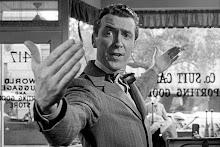
James Stewart, The Shop Around the Corner
Conrad Vedit, Contraband
Henry Fonda, The Grapes of Wrath
Best Actress:
Joan Fontaine, Rebecca
Rosalind Russell, His Girl Friday
Valerie Hobson, Contraband
Margaret Lockwood, Night Train to Munich
Margaret Sullavan, The Shop Around the Corner (so interesting how my win is a Gothic Romance lead and the other four are screwball comedy stars)
Best Supporting Actor:
John Carradine, The Grapes of Wrath
George Sanders, Rebecca
Walter Brennan, The Westerner
Conrad Veidt, The Thief of Baghdad
Frank Morgan, The Shop Around the Corner
Best Supporting Actress:
Jane Darwell, The Grapes of Wrath
Paulette Goddard, The Great Dictator
Judith Anderson, Rebecca
Laraine Day, Foreign Correspondent
Evelyn Venable, Pinnochio
1941
The Maltese Falcon
Citizen Kane
The Strawberry Blonde
Ball of Fire
Sullivan's Travels
Dumbo
The Lady Eve
The Devil and Daniel Webster
Love Crazy
49th Parallel
Best Director: Orson Welles, Citizen Kane
Best Actor: Humphrey Bogart, The Maltese Falcon
Best Actress: Barbara Stanwyck, The Lady Eve
Best Supporting Actor: Van Heflin, Johnny Eager
Best Supporting Actress: Mary Astor, The Maltese Falcon
1942
Casablanca
Saboteur
Bambi
Now, Voyager
Yankee Doodle Dandy
This Gun for Hire
In Which We Serve
This Above All
Mrs Miniver
The Magnificent Ambersons
Best Director: Michael Curtiz, Casablanca
Best Actor: Humphrey Bogart, Casablanca
Best Actress: Ingrid Bergman, Casablanca
Best Supporting Actor: Claude Rains, Casablanca
Best Supporting Actress: Agnes Moorehead, The Magnificent Ambersons
1943(interesting to note how many anti-war/violence films came out this year)
The Life and Death of Colonel Blimp
Shadow of a Doubt
The Ox-Bow Incident
Heaven Can Wait
Five Graves to Cairo
This Land is Mine
The Human Comedy
The More the Merrier
The Silver Fleet
Sahara
Best Director: Powell and Pressburger, The Life and Death of Colonel Blimp
Best Actor: Joseph Cotten, Shadow of a Doubt
Best Actress: Teresa Wright, Shadow of a Doubt
Best Supporting Actor: Dana Andrews, The Ox-Bow Incident
Best Supporting Actress: Deborah Kerr, The Life and Death of Colonel Blimp
1944
Double Indemnity
Laura
Henry V
Gaslight
Arsenic and Old Lace
Lifeboat
The Way Ahead
Going My Way
Best Director: Billy Wilder, Double Indemnity
Best Actor: Fred MacMurray, Double Indemnity
Best Actress: Barbara Stanwyck, Double Indemnity
Best Supporting Actor: Edward G. Robinson, Double Indemnity
Best Supporting Actress: Tallulah Bankhead, Lifeboat
1945 (need to watch Children of Paradise)
Brief Encounter
A Tree Grows in Brooklyn
The Lost Weekend
Leave Her to Heaven
'I Know Where I'm Going!'
Rome, Open City
The Way to the Stars
And Then There Were None
Spellbound (I've decided I'l also put films I don't really like but are worth a watch on these lists, if I've really no other alternative)
Best Director: David Lean, Brief Encounter
Best Actor: Ray Milland, The Lost Weekend
Best Actress: Celia Johnson, Brief Encounter
Best Supporting Actor: James Dunn, A Tree Grows in Brooklyn
Best Supporting Actress: Someone from A Tree Grows in Brooklyn, for sure. I remember all the ladies making incredibly strong impressions, but I need to recollect who's lead/supporting, and so on. As an alternative, Jane Wyman, The Lost Weekend, is another strong performance.
1946(actually have quite a bit more I want to see from this year, though I have seen The Big Sleep and wasn't a huge fan of it)
It's a Wonderful Life
The Best Years of Our Lives
Beauty and the Beast
Great Expectations
A Matter of Life or Death
A Night in Casablanca
The Killers
I See a Dark Stranger
The Yearling
Notorious
Best Director: Frank Capra, It's a Wonderful Life
Best Actor: James Stewart, It's a Wonderful Life
Best Actress: Ingrid Bergman, Notorious
Best Supporting Actor: Harold Russell, The Best Years of Our Lives
Best Supporting Actress: Donna Reed, It's a Wonderful Life
1947(really need some recommendations for this year, though I love/like all the films on this list. I'd say Out of the Past and Ride the Pink Horse seem like two films that'd be up my street. It seems to be a pretty strong year overall though, since I can already craft some pretty nifty lineups with the limited number of films I've seen.)
Odd Man Out
Miracle on 34th Street
Brighton Rock
The Ghost and Mrs. Muir
Black Narcissus
The Secret Life of Walter Mitty
Monsieur Verdoux
Best Director:
Carol Reed, Odd Man Out
John Boulting, Brighton Rock
Powell and Pressburger, Black Narcissus
George Seaton, Miracle on 34th Street
Norman Z. McLeod, The Secrey Life of Walter Mitty
Best Actor:
Richard Attenborough, Brighton Rock
James Mason, Odd Man Out
Rex Harrison, The Ghost and Mrs. Muir
Edmund Gwenn, Miracle on 34th Street
Danny Kaye, The Secrey Life of Walter Mitty
Best Actress:
Gene Tierney, The Ghost and Mrs Muir
Hermione Baddeley, Brighton Rock
Deborah Kerr, Black Narcissus
Natalie Wood, Miracle on 34th Street
Maureen O'Hara, Brighton Rock
Best Supporting Actor:
F.J. McCormick, Odd Man Out
Harcourt Williams, Brighton Rock
Gene Lockhart, Miracle on 34th Street
W.G. Fay, Odd Man Out
Robert Newton, Odd Man Out
Best Supporting Actress:
Kathleen Byron, Black Narcissus
Kathleen Ryan, Odd Man Out
Virginia Mayo, The Secret Life of Walter Mitty
Edna Best, The Ghost and Mrs. Muir
Maureen O'Hara, Miracle on 34th Street
1948 (some serious re-watches/films I have to watch for my top 10, any recommendations would be appreciated. I really liked Drunken Angel, but I feel a re-watch might benefit it, and I still have not seen The Treasure of Sierra Madre. So this list might change anytime soon)
The Bicycle Thieves
The Fallen Idol
Drunken Angel
Oliver Twist
The Red Shoes
Hamlet
Best Director: Vittorio De Sica, The Bicycle Thieves
Best Actor:
Toshiro Mifune, Drunken Angel
Takashi Shimura, Drunken Angel
Laurence Olivier, Hamlet
Ralph Richardson, The Fallen Idol
Lamberto Maggiorani, The Bicycle Thieves
Best Actress: Moira Shearer, The Red Shoes
Best Supporting Actor: Alec Guinness, Oliver Twist
Best Supporting Actress: Sonia Dresdel, The Fallen Idol
1949 (very strong year. I still need to see The Quiet Duel)
Just a short little preface to kick things off. I love film in general, but occasionally there's some things I just can never bring myself to see. Recent Adam Sandler films in general, for example. That's not to say, however, that I can define any of these films as objectively 'bad' - unless they actually are bad, like many recent Adam Sandler films, by all accounts, but I haven't seen them so I can't comment. What I'm trying to get at is the definition of 'bad' is different in many peoples' eyes, and the same extends to acting. I'm sure there's some who feel Julia Roberts is the greatest actress alive even though I'm mostly negative about most of her work.
There are, however, some actors who've been viewed by the general consensus as being 'bad' actors. Now I for one never like to pigeonhole them into this sort of category - rare is the actor I've seen the entire filmmography of, hence how would I know if so-and-so who I find so-so in most things, has delivered an Oscar-worthy performance some 20 years into the vault? I was far too quick to call Tom Sturridge the worst actor working today last year, since he's apparently brilliant in the 'Hollow Crown' series. Jai Courtney was a complete cinematic 'no no' for me, and ended up being one of the highlights of Suicide Squad. Thus, here are some performances by actors generally regarded as 'bad' actors by most of the public; some are generally quite lacklustre I'll admit, but these are their impressive high points, showing that perhaps there are no bad actors, no badly written roles.
Blake Lively, The Town
I should note I haven't seen The Shallows yet, which I've heard is a rather good one-man show horror film with a solid leading turn from Lively. I generally don't find Lively a terrible actress, just an extremely bland one for the most part. In The Town however, Lively really stretches herself and completely disappears into the role of Krista "Kris" Coughlin, the junkie ex-girlfriend of Ben Affleck's Doug MacRay. Her character, though little more than a plot device in the grand scheme of the plot, stood out to me as one of the most memorable parts of the film, and makes her interrogation scene surprisingly moving and poignant.
Sean Young, Blade Runner
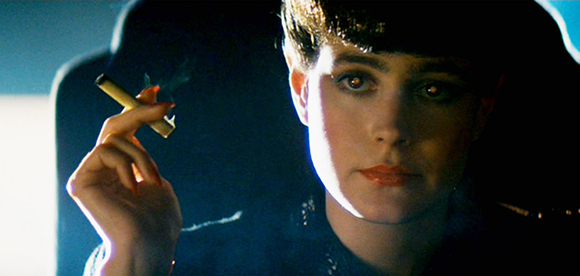
Blade Runner is a masterpiece in many regards, and the performance of Rutger Hauer, the visuals and direction, the soundtrack, are all routinely praised enough. What's not given enough credit though, is Sean Young's performance as Rachel, an experimental replicant who belives that she is human. Rachel is sort of the femme fatale of Blade Runner's noir world, though not quite. Her performance reminds me a bit of the way Silver Hair plays a role in Raymond Chandler's The Big Sleep. A mysterious, intriguing figure with a surprising amount of tenderness behind the stereotype. Young's performance is both sexy and sensitive, making her the true heart of the film. She'd go on to a rather soured reputation in Hollywood and a string of Razzi-nominated roles, but if this role's anything to go by, she was, and I'll bet still is, extremely talented.
Keanu Reeves, A Scanner Darkly
Reeves really isn't the terrible actor he's made out to be sometimes. He's given some terrible performances, no doubt, in the likes of Dracula (that accent though), Dangerous Liasons, but in general I find him adequate in his straightforward leading man roles in Speed and The Matrix. entertaining in smaller supporting roles in the likes of Thumbsucker, and rather impressive in the intensities and emotional power of John Wick or the entertaining tomfoolery of Ted of Bill & Ted. His best performance, however, remains his turn as undercover drug agent Bob Arctor who becomes addicted to the drug he's investigating. Reeves' performance as a listless man who's lost sense of his own identity through his line of work is rather terrific, as he brings such tragic pathos to the role, underplaying the slow mental breakdown of his character to perfection.
Kate Beckinsale, Love & Friendship
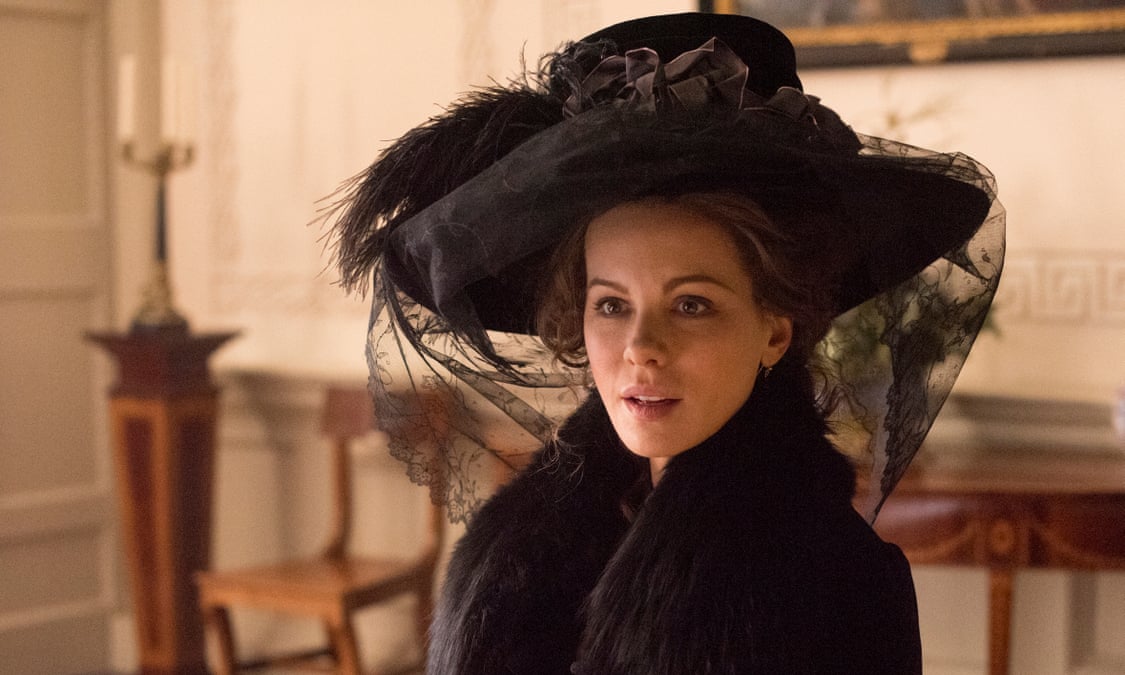
I won't say too much about her as I'll most likely be covering her performance more thoroughly by the end of this year. Beckinsale's gained a reputation for being a one-note action movie star of the Underworld series in recent years and the participant in lackluster films like Pearl Harbor and Total Recall. Well with her Lady Susan, I've been exposed to a whole new side of Beckinsale's talents and suffice to say, I'm intrigued if there's more where this came from.
Toby Stephens, Jane Eyre
Ticking off both boxes of 'terrible Bond villain' and 'terrible Jay Gatsby', Stephens wasn't a particularly captivating actor to me till I watched a bit more of his work. Namely his turn as a haunted, neurotic doctor in And Then There Were None and his brilliant, definitive work as Mr Rochester in Jane Eyre. Perhaps it's the writing behind him, or the direction, or a brilliant Ruth Wilson to play off, but Stephens is a magnificent Byronic hero, bettering the likes of Michael Fassbender and Orson Welles in this notoriously difficult role. Whether it's the rougher, darker side to Rochester or his tender, romantic sensitivity within, Stephens is charismatic, heartbreaking and a great pleasure to watch, which I have to say completely obliterated all memories of Die Another Day.
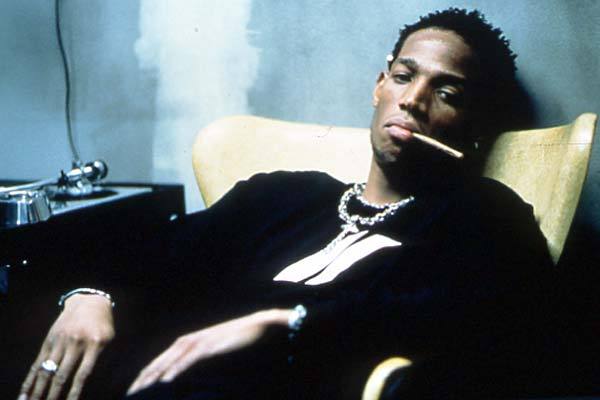
Marlon Wayans, Requiem for a Dream
Notable for having one of the most spinechilling soundtracks of all-time, Requiem for a Dream is also notable for having Marlon Wayans in not just a serious role far removed from his usual comedic schtick, but as a heroin addict. Wayans gives perhaps the most vivid physical portrayal of addiction in the whole cast, and his final scene is absolutely heartbreaking. It's such a shame actually the film kind of shoehorns him aside in terms of focus, as he's equally impressive to Ellen Burstyn's heartbreaking lead turn in terms of the vivid impact his acting brings to the screen. Shame he hasn't done anything similar since; he's certainly got the acting chops.
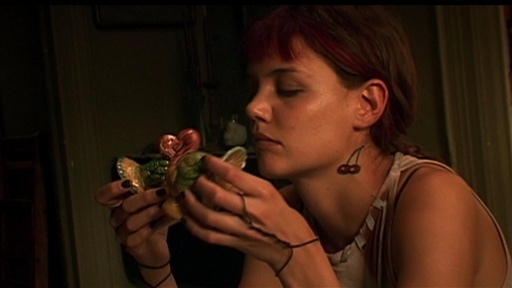
Katie Holmes, Pieces of April
Patricia Clarkson got the Oscar nomination, and rightfully so, for her moving supporting turn, but it's a shame they couldn't award Ms Holmes here one as well. Holmes is unfortunately probably best known to the public as a stick in the mud of Batman Begins who didn't appear in The Dark Knight, or Tom Cruise's ex-wife. Shame really, as there's a glowing example of her talent as an actress here. Holmes effortlessly carries this indie flick upon her shoulders as April, a young wayward lady trying to prepare the perfect Thanksgiving for her family. It's a simple role in a simple film, but don't let that mask the excellence of her charming, funny and quite moving performance here.
Kirsten Stewart, Camp X-Ray
I don't get all the Kristen Stewart hate sometimes. She's not the greatest actress in the world by any stretch, but she has talent, and it's really not her fault the character of Bella is so darn dull in the Twilight series. Outside of that role, she's put in solid supporting performances in Still Alice and On the Road, and a good stab at Joan Jett in The Runaways. Camp X-Ray stands as her career-best work though. She's perfectly cast as a tough, rigid but inwardly emotional Army Private stationed at Guantamo Bay, and I don't mean that as a diss on her supposedly 'unemotional' style of acting. That's used to perfection here as she downplays her acting with her character's reserve and detatchment, before gradually finding humanity within the character with her connection to a prison inmate, Ali Amir (Peyman Moaadi), It's a performance that requires patience to appreciate in a film that's not really anything great, but give it a watch. It'll show you Stewart's far from a one-trick pony.
Vin Diesel, The Iron Giant
I also don't really get Vin Diesel hate. Sure, he's very limited as an actor, but it works well enough for his most prominent films. He's a good action lead for the Fast and Furious series (though count me out as a supporter for its relentless continuation) and a solid Riddick. You may not remember him that well, but he's also extremely good in Saving Private Ryan in a very small role as one of the troops sent to save Private Ryan, his death scene being one of the most emotionally poignant scenes in the film. His main strength is his vocal chops and it's frequently well-utilized from that final scene in Fast 7 (probably the only scene I actually genuinely liked there), to Groot, and of course his work as the Iron Giant. Back when he wasn't that big of a name, Diesel took on this role and gave such personality and humour and compassion, in addition to some grand vocal power, that was perfect for the fifty-foot mass of metal and heart.
Jesse Eisenberg, The End of the Tour/The Social Network
I feel I should probably leave this to a longer article. Eisenberg is an Oscar-nominee and generally regarded as quite talented. Unfortunately his Lex Luthor might cast a worse impression on him generally than I'd have liked. Whatever negative impact it might bring to his reputation, let me defend him by saying that his performances as Mark Zuckerberg and David Lipsky are very special performances worth further discussing.
Jamie Foxx, Django Unchained
It has to be said Django Unchained has three great characters played by three great actors in the form of Calvin Candie, Stephen and Dr King Schultz. Leonardo DiCaprio, Samuel L. Jackson and Christoph Waltz are all individually brilliant in their showy roles. Where does that leave our lead Django then? Well, Django is played by Jamie Foxx who's an Oscar-winner, but has also in recent years done many an underwhelming film with many an underwhelming role, culminating with one of the worst comic book villains in the form of Electro. So he can be a very bad actor, but that doesn't mean he doesn't have talent. I liked him in Ray and Collateral even if he wasn't necessarily Oscar-worthy in either. And in Django he actually takes a rather thin lead character by Tarantino standards, and fleshes him out into a deadpan, funny, badass and surprisingly sweet hero we the audience can root for quite easily. I really like Foxx's work here and can't imagine anyone else in the role. Michael Cera, This is the End
Cera is perhaps the definition of a one-trick actor in many people's books. Which is true to an extent. He was my favourite part of Superbad but while his co-star Jonah Hill has branched off into two Oscar nominations (though Moneyball, really?) and a wider range of comedic roles of both the straight man and funnyman variety, Cera's still...basically playing Cera. Scott Pilgrim and Evan are pretty much indistinguishable, and I say that as someone who loves both those films he's in. Now I don't find him obnoxious as some do, but I do agre he is one-note. Except for...This is the End, where funnily enough he plays Michael Cera, literally, but an entire deconstruction of his usual self. He begins his performance by inappropriately touching Rihanna and getting slapped for it, some rather cringeworthy bathroom shenanigans, and blowing coke into McLovin's face. Cera makes his performance the comedic highlight of the film, and even the most fervent Cera hater may feel sad at his early departure. There's definitely more to be mined from the 'foulmouthed Michael Cera' department. Adam Sandler, Punch-Drunk Love
The name Adam Sandler seems to be synonymous with bad films nowadays. It's easy to forget that he once was a genuiely funny comedian in the likes of The Longest Yard and Happy Gilmore, and a sweet comedic presence in 50 First Dates. And then there's his also comedic, but with a serious bent, performance in Punch-Drunk Love as Barry, a lonely and deeply troubled 'man child' of sorts who finds a new lease of life in a kooky British lass (a luminous Emily Watson). Sandler is utterly fantastic in each phase of his character's growing confidence in himself, and proves that there's no actor Paul Thomas Anderson can't mould into giving a great performance, though Sandler himself has to be credited to for his great dramedy work here. Mark Wahlberg, Boogie Nights
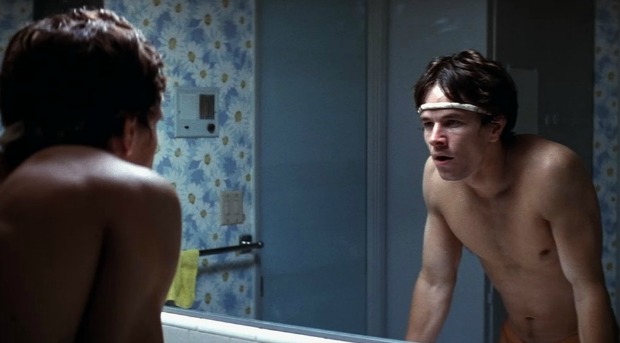
He's rather distracting and not very convincing when miscast, and in bad movies he's usually terrible. In good films though, he can be very good. A bit of an obvious statement to make, I guess, but he's genuinely quite a good comedic talent as can be seen in The Departed, and Ted and Ted 2. As for his dramatic prowess, he may have been quite overshadowed in The Fighter and Lone Survivor by his brilliant co-stars Christian Bale and Ben Foster, but in Boogie Nights, again with Paul Thomas Anderson, his performance as amateur porn star Dirk Diggler is delightful. He's great at both playing the ambitious young man and the 'bad acting' of the porn star, and makes for a very strong lead to carry us through this fantastic film.